Implementation intentions
Implementation intentions are concrete if-then plans, such as “On Monday at 8:00, I will…”. Tying a goal to a specific moment makes it far more likely to happen.
Good intentions often fail at the moment of action, not because people change their minds, but because the moment passes unnoticed. A specific plan fixes that. A meta-analysis of 94 studies found that forming if-then plans had a medium-to-large effect on reaching goals (d = 0.65). In a field experiment at a large company, employees who were asked to write down the date and time they planned to get a flu shot got vaccinated 4.2 percentage points more often than the 33.1% in the control group. Writing down only the date had no significant effect. Before the 2008 US presidential election, phone calls that asked people when, where and how they would vote raised turnout by 4.1 percentage points, and by 9.1 points in households with only one eligible voter, while a standard encouragement call had no significant effect. The plan has to be concrete: a time, a place, a cue.
How to apply
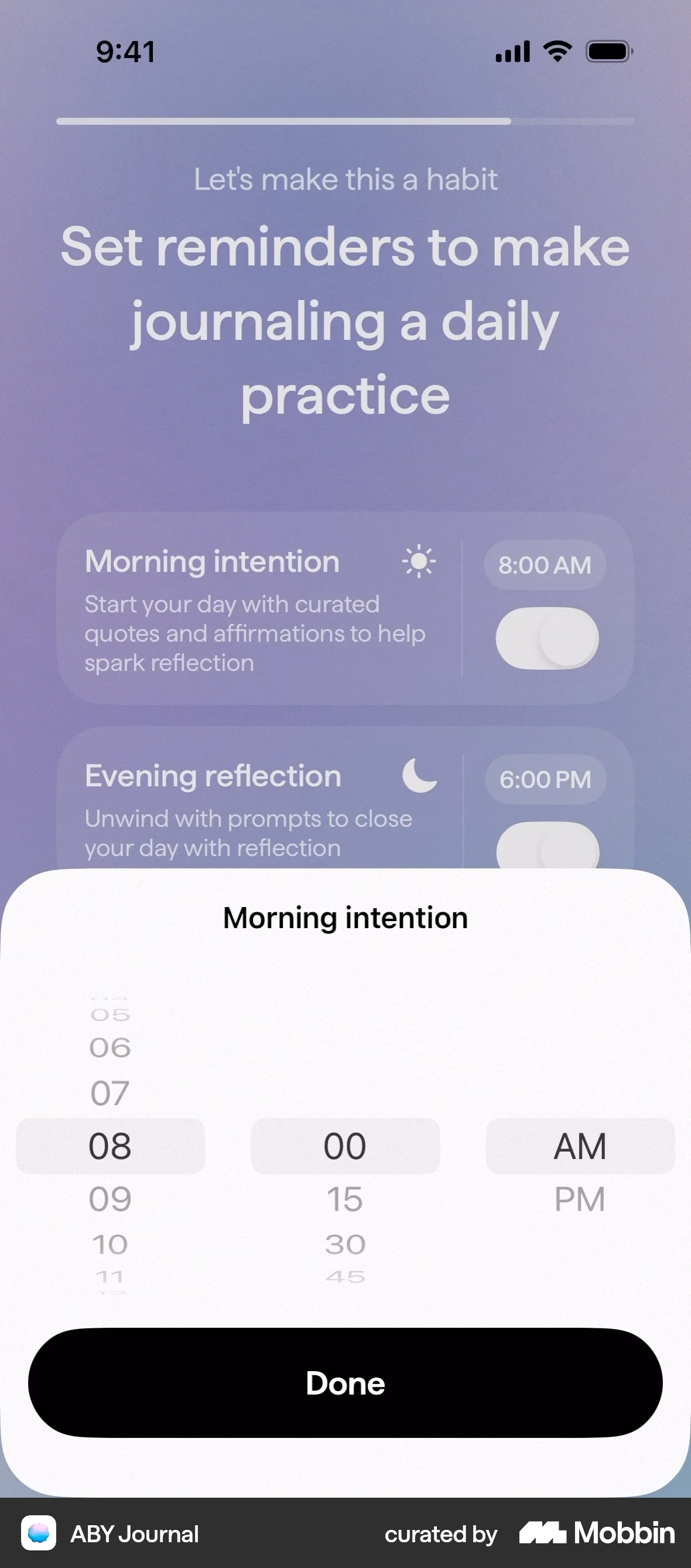
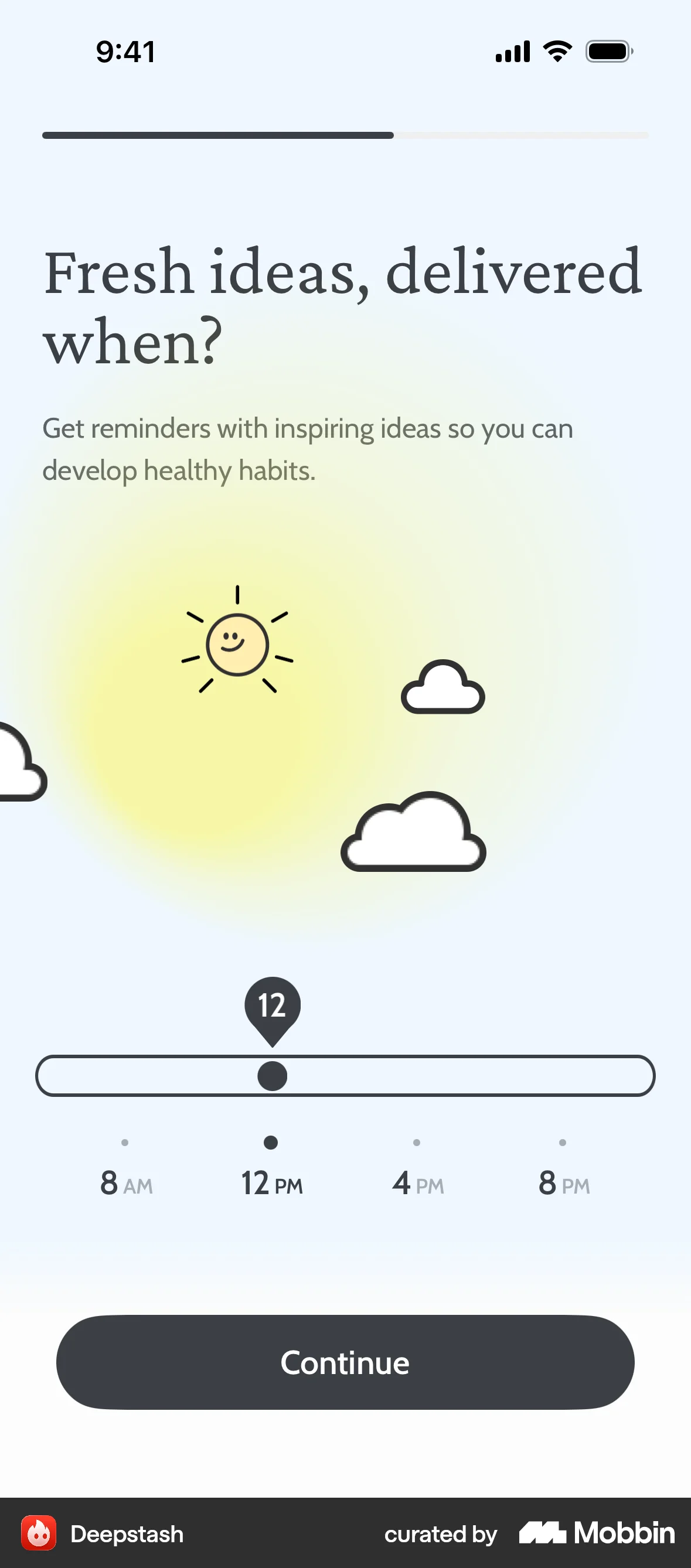
- After sign-up, ask users when they will do the first key task, and offer specific time slots to pick from.
- Ask for a time, not just a day. In the flu shot study, only plans with a date and a time made a difference.
- Turn the plan into a calendar event or a reminder that fires at the moment the user chose.
- Tie the action to an existing routine: “When I open my laptop on Monday, I'll check my dashboard.”
- Ask where and how as well as when, such as which device they will use and which step they will do first.
What to avoid
- Generic encouragement (“Don't forget to…”) instead of a concrete plan. Encouragement calls had no effect on turnout.
- Asking for a plan and then ignoring it. If users pick a time, remind them at that time.
- Making the planning step mandatory. It should be easy to skip.
- Prompting plans for goals users don't share. Planning helps people do what they already intend to do.
Real-world examples

References
- Gollwitzer & Sheeran (2006). Implementation Intentions and Goal Achievement: A Meta-analysis of Effects and Processes. Advances in Experimental Social Psychology.
- Milkman, Beshears, Choi, Laibson & Madrian (2011). Using Implementation Intentions Prompts to Enhance Influenza Vaccination Rates. PNAS.
- Nickerson & Rogers (2010). Do You Have a Voting Plan? Implementation Intentions, Voter Turnout, and Organic Plan Making. Psychological Science.
For agents
An agent-friendly guide to this principle lives at /agents/implementation-intentions.md.
Our MCP server and skills for all principles are coming soon.
Similar principles
Disclaimer: The theories here are just that — theories. They may not apply universally and should be considered in context. Use your own judgment and consult additional sources when applying these principles.