Zeigarnik effect
The classic claim comes from Bluma Zeigarnik's 1927 dissertation: taking on a task builds a quasi-need, a tension system that stays charged until completion discharges it, so an unfinished task keeps a claim on memory and on action.
Two separate predictions sit inside that one story, and they have come apart. The memory prediction became the Zeigarnik effect. The action prediction, tested by Maria Ovsiankina a year later, became the Ovsiankina effect: when people are interrupted and then left alone, they resume. Modern work does not support the tension account of the memory half, and the better-replicated resumption half does not need it. Ghibellini and Meier's own 2024 experiment points at a different mechanism for whatever memory advantage does appear: a discrepancy between expecting to succeed and then failing, which makes the unsolved item stand out, closer to a distinctiveness effect than to a charged tension system. For interface work, the useful version of the principle is the resumption tendency, not the memory advantage. People who left something half-done tend to take the opportunity to finish it. They do not reliably remember what it was, which is exactly why the interface has to carry the memory for them.
The original numbers were large and have never been matched. As tabulated by MacLeod (2020), Zeigarnik's Experiment 1 tested 32 adults on 22 tasks and produced an interrupted-to-completed recall ratio of 1.9 — nearly twice as many interrupted as completed tasks recalled — with 81.2% of participants recalling more interrupted than completed tasks. Her Experiments 2 to 4 gave ratios of 2.0, 1.9 and 2.1. MacLeod also reports Marrow (1938), who replicated the pattern on 30 participants with 20 paper-and-pencil tasks and got a ratio of 1.77.
Then the record turns. Butterfield's review concluded that the Zeigarnik effect is far from being the invariable result in the interrupted task paradigm, and that frequently more completed than incompleted tasks are recalled. Van Bergen set out in 1961 to reproduce Zeigarnik exactly, tested 34 participants, and found a ratio of .88, with 20 of them recalling more completed than interrupted tasks; she ran seven experiments in total and reported that in none of them was the phenomenon verified, and that of the 44 papers she reviewed as replication attempts, fewer than a third reported a Zeigarnik effect.
The 2025 meta-analysis settles the size of it. Ghibellini and Meier screened 1,349 de-duplicated publications down to 59, of which 38 investigated the Zeigarnik effect, 20 the Ovsiankina effect and one both. On the most commonly used measure, the ratio of mean interrupted recall to mean completed recall was 0.99 across 38 publications, and still 0.99 with Zeigarnik's own data removed: no difference. On the measure they recommend, interrupted tasks made up 49.16% of all tasks recalled, a slight disadvantage. Where an effect size could be computed at all, from eight publications, the weighted average was dz = 0.15. Zeigarnik's own preferred ratio, which averages per-participant ratios and is distorted by extreme values, gives 1.13 including her data and 1.09 without it, which is how the effect survived as folklore.
The resumption half holds up. In the same meta-analysis the weighted resumption rate was 67.00% across 21 publications, and 66.79% with Ovsiankina's own study excluded, against a 50% reference point. The authors are careful about this: resumption was studied descriptively, with heterogeneous procedures, so treat 67% as indicative rather than as an effect size. Their conclusion is that the Ovsiankina effect is a general tendency while the Zeigarnik effect lacks universal validity. A modern digital version exists: Birk, Mandryk and Baumann interrupted people playing a computer game with a fake network-interruption notice they could dismiss with one click or let time out, across three studies with 208, 457 and 210 participants, and found that willingness to resume tracked a self-regulation trait (demand-related action orientation) rather than being uniform, and that repeated exposure led to adaptation.
The best-evidenced neighbouring finding is about open goals occupying attention rather than memory. Masicampo and Baumeister had 73 undergraduates (69 analysed) write about either two important unfinished errands, the same errands plus a specific plan, or two recently completed tasks, then read 3,200 words of a novel. Self-reported intrusions during reading differed by condition, F(2, 68) = 4.67, p = .013, partial eta squared = .13: the unfinished group reported more distraction by task-related thoughts (M = 3.00, SD = 1.90) than controls (M = 1.82, SD = 1.44), F(1, 66) = 7.46, p = .01, while the plan group reported fewer than the unfinished group (M = 1.77, SD = 1.06), F(1, 66) = 6.41, p = .014, and did not differ from controls. In their Study 3, 126 participants primed with the unfulfilled goal of exercising showed higher accessibility of goal-related words than controls, F(1, 122) = 5.73, p = .018, but the effect was moderated by how much they valued the goal (interaction β = .21, t(83) = 2.02, p = .047; β = .48, t(83) = 3.37, p < .001 at high importance, nothing at low importance). Treat these as suggestive rather than settled: they are small single-lab samples from 2011, with no independent direct replication found.
Field evidence that open loops cost something is stronger on the harm side than the engagement side. Syrek, Weigelt, Peifer and Antoni matched 357 Friday and Monday observations from 59 employees over 12 weeks and found that unfinished tasks at the end of the week predicted impaired weekend sleep, mediated by affective rumination, with a separate between-person effect of accumulated unfinished tasks over three months.
When it holds
- The memory advantage is not something you can design around. Averaged over studies it is zero, and the one well-powered modern study that found it (more than 1,000 adults, 12 anagrams, 60 seconds each) found it only among people high in hope of success, and in a design where the interruption also ended the task by revealing the answer.
- Where the effect appears, it depends on the atmosphere, and the direction flips. In the meta-analysis the ratio was 1.07 in deliberately relaxed settings, 0.96 in neutral task-focused settings and 0.88 in achievement or evaluative settings, where recalling your failures threatens the ego. Pressure does not strengthen this effect; it inverts it. Achievement motivation on its own explained nothing (1.00, 0.92 and 0.96 for high, moderate and low).
- Interruption in the original paradigm was imposed by an experimenter with authority over a participant who had agreed to perform. Ghibellini and Meier argue those conditions were common historically and are rare now, which is part of why the effect stopped appearing. A user who abandons a checkout has not been interrupted by you; they chose to stop. Nothing in this literature says they feel tension about it.
- Resumption needs a maintained goal. Ovsiankina's own clinical work and later studies found reduced or absent resumption where goal-directed behaviour was impaired. And resumption drops when an attractive alternative resembles the interrupted task, or when the interruption makes returning to the original situation hard; Zeigarnik herself found that participants who could not easily get back to the setting recalled more completed tasks.
- Extrinsic payment undercut resumption in one study: telling participants in advance about financial compensation lowered the resumption rate, which the authors read as the paid participation goal replacing the completion goal. If you pay people to come back, you are not using this effect, you are replacing it.
- Resuming has a cost that grows with the interruption. Monk, Trafton and Boehm-Davis showed across three experiments that longer and more cognitively demanding interruptions produced longer resumption times, consistent with decay of the suspended goal. This is the finding that actually justifies your resume affordance: the user has forgotten their place, not remembered it extra well.
How to apply
- Persist the half-finished thing by default. Save drafts, partial forms, filters, carts and uploads server-side without being asked, because the user will not reconstruct the state from memory.
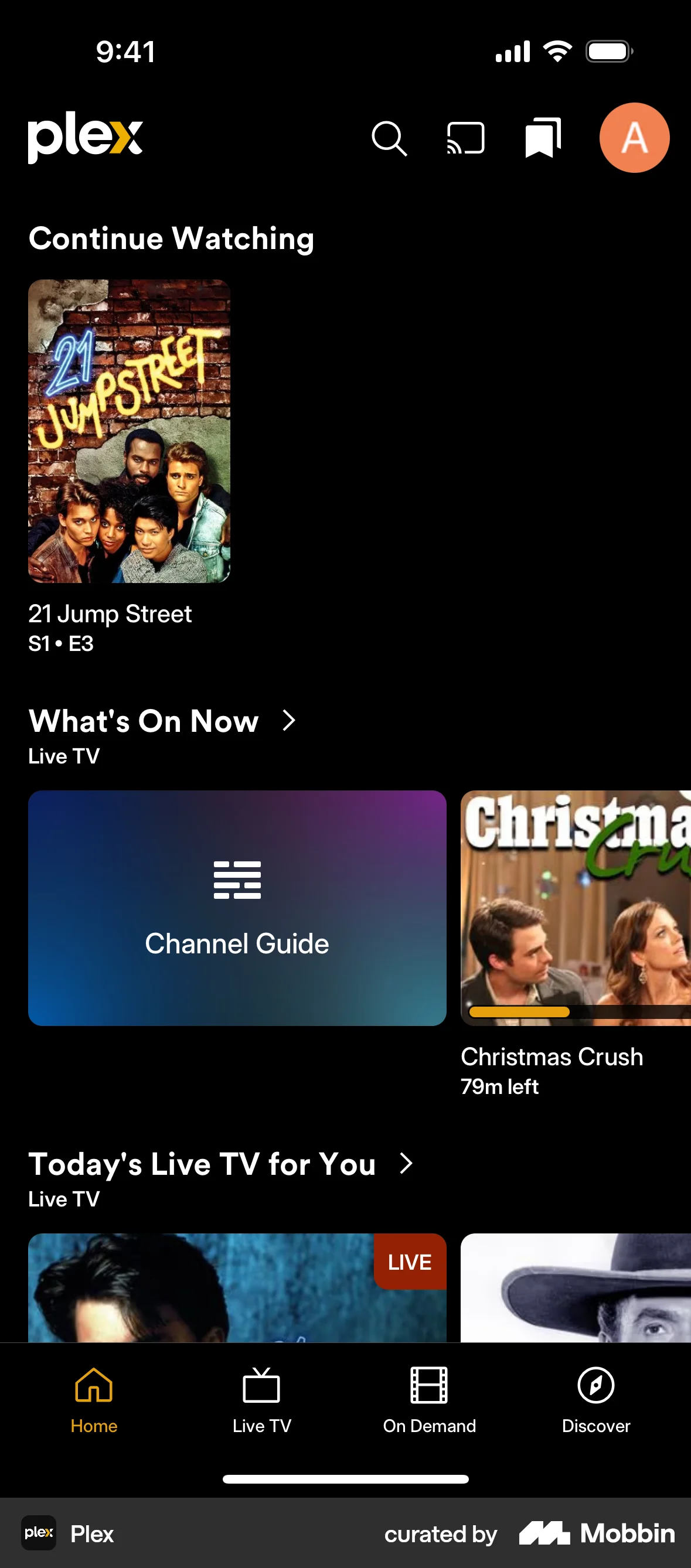
- Put the unfinished item where returning users land, named concretely: the document title, the item in the basket, the step they stopped on. Drafts lists and a resume-where-you-left-off row are the two patterns that carry this.
- Make resumption one tap, and restore context rather than just position. Monk's resumption-cost result argues for showing what was done and what is next, not only reopening the last screen.
- Prefer recognition to recall at the return point. Show the three things in progress instead of asking the user what they were doing.
- Checklists work here only when the items are the user's own real obligations, and when each one can be acted on from the list. An open checklist is a list of commitments; a list of invented commitments is noise.
- If an open loop is causing anxiety rather than motivation, let people close it with a plan instead of with work: a scheduled date, a reminder, a snooze. That is the one intervention in this literature with a measured effect on intrusive thoughts, and it is the implementation-intentions mechanism.
- Let people abandon on purpose. A visible dismiss, delete draft or clear basket control is part of the pattern; without it the unfinished row becomes a permanent accusation.
What to avoid
- Manufacturing incompleteness. Progress bars that start at zero of seven for steps the product invented, profile completeness scores padded with optional fields, and onboarding checklists whose items exist to be nagged about all trade on an effect the evidence does not support, and they cost you trust when a user notices the task was never theirs.
- Withholding something the user has earned in order to keep a loop open. Artificial cliffhangers are a curiosity-gap play, not this one; the interrupted-task literature says nothing about teasing content.
- Nagging, which has a legal edge in the EU. Article 25(1) of the Digital Services Act prohibits providers of online platforms from designing interfaces in a way that deceives or manipulates the recipients of their service, and Article 25(3)(b) names repeatedly requesting that the recipient make a choice where that choice has already been made, especially by presenting pop-ups that interfere with the user experience, as a practice the Commission may issue guidelines on. A reminder the user has already declined is that practice.
- Treating reminder emails about unfinished baskets or drafts as exempt from marketing rules. Under UK PECR regulation 22 you need consent, or the soft opt-in, which requires that the person bought or negotiated to buy a similar product or service from you in the past, that you gave them a simple way to opt out when you collected the address and again in every message you have sent. The ICO's electronic mail marketing guidance does not resolve whether a basket reminder counts as marketing, so treat it as if it does. In the US, CAN-SPAM requires a clear and conspicuous opt-out, honouring it within 10 business days, and no deceptive subject lines, with penalties of up to $53,088 per email; “your cart is about to expire” when it is not is exactly the deceptive claim the rule targets.
- Using the open loop as a pressure device. Unfinished tasks predict rumination and impaired sleep (Syrek et al., 2017). Repeatedly surfacing someone's backlog is not a neutral nudge.
- The ethical line is the right one: remind about tasks the user started, not ones the product invented.
Real-world examples


Measuring it
- The metric that would show it worked: resumption rate and time-to-resume for genuinely abandoned flows, split by how the user left (navigated away, session expired, explicit save) and measured against users who were not shown the resume affordance. Completion of resumed items, not clicks on the reminder, is the outcome.
- The metric that would show it backfired: dismissals and opt-outs of the reminder, notification disable rate, and deletion of drafts without opening them. Watch for a rising share of reminders about items the user never intended to finish, which is the signature of a manufactured loop.
- Because the memory claim is close to zero, do not instrument recall. Instrument whether people get back to the work.
References
- Ghibellini & Meier (2025). Interruption, Recall and Resumption: A Meta-Analysis of the Zeigarnik and Ovsiankina Effects. Humanities and Social Sciences Communications.
- MacLeod (2020). Zeigarnik and von Restorff: The Memory Effects and the Stories Behind Them. Memory & Cognition.
- Butterfield (1964). The Interruption of Tasks: Methodological, Factual, and Theoretical Issues. Psychological Bulletin.
- Ghibellini & Meier (2024). Hope of Success Relates to the Memory for Unsolved Compared to Solved Anagrams. Quarterly Journal of Experimental Psychology.
- Masicampo & Baumeister (2011). Consider It Done! Plan Making Can Eliminate the Cognitive Effects of Unfulfilled Goals. Journal of Personality and Social Psychology.
- Birk, Mandryk & Baumann (2020). Just a Click Away: Action-State Orientation Moderates the Impact of Task Interruptions on Initiative. Journal of Personality.
- Monk, Trafton & Boehm-Davis (2008). The Effect of Interruption Duration and Demand on Resuming Suspended Goals. Journal of Experimental Psychology: Applied.
- Syrek, Weigelt, Peifer & Antoni (2017). Zeigarnik's Sleepless Nights: How Unfinished Tasks at the End of the Week Impair Employee Sleep on the Weekend Through Rumination. Journal of Occupational Health Psychology.
- Regulation (EU) 2022/2065 (Digital Services Act), Article 25.
- Information Commissioner's Office. Guide to PECR: Electronic Mail Marketing (regulation 22).
- Federal Trade Commission. CAN-SPAM Act: A Compliance Guide for Business.
For agents
An agent-friendly guide to this principle lives at /agents/zeigarnik-effect.md.
Our MCP server and skills for all principles are coming soon.
Similar principles
Disclaimer: The theories here are just that — theories. They may not apply universally and should be considered in context. Use your own judgment and consult additional sources when applying these principles.