Anchoring
Anchoring is the tendency to rely too heavily on the first number or fact encountered, so later judgments are adjusted from that starting point instead of made independently.
Anchoring is one of the most robust findings in behavioral science. In Tversky and Kahneman's classic study, people who saw a wheel of fortune stop at 10 estimated that 25% of UN member countries were African, while those who saw it stop at 65 estimated 45%. An obviously irrelevant number moved their answer by 20 points. The effect replicated across the 36 samples of the Many Labs project, and experts are not immune: real estate agents' appraisals of the same house shifted with the listing price they were given. In interfaces, the anchor is usually the first price, plan or number on the screen. Listing options from most to least expensive leads people to choose pricier ones when price signals quality, and precise anchors pull judgments closer than round ones. Anchors only persuade honestly when they are real. Inflated “was” prices are deceptive, and in the EU a sale price must be compared with the lowest price of the previous 30 days.
How to apply
- Show the most complete plan or package first, then the one you expect most people to choose, so the target option reads as reasonable.
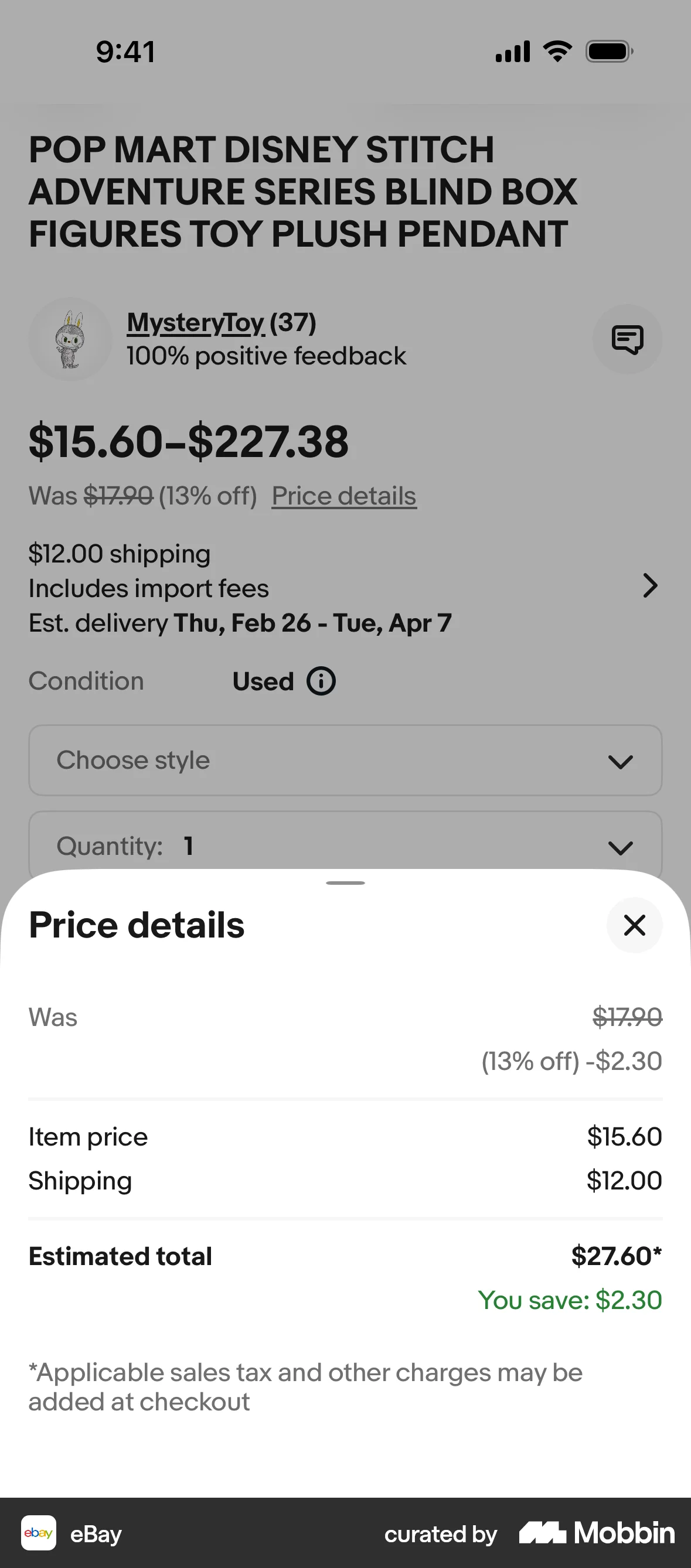
- Put a genuine reference price next to a discount, struck through, so the saving is visible at a glance.
- Before revealing a price, show a real, relevant comparison: the cost of the problem, or the time it takes to do the work by hand.
- Use precise figures for anchors you want to stick, such as 4,850 rather than 5,000.
What to avoid
- Inflated or invented “was” prices. In the EU, a price reduction must reference the lowest price of the previous 30 days, and in the US the FTC requires former prices to be genuine.
- Anchor plans that exist only to be rejected. If nobody would ever buy the expensive option, it reads as a trick.
- Leading with a low starting price and adding mandatory fees later. The first number sets expectations, and the real total then feels like a loss.
- Anchoring on numbers that have nothing to do with the product or the user's situation.
Real-world examples



References
- Tversky & Kahneman (1974). Judgment under Uncertainty: Heuristics and Biases. Science.
- Klein et al. (2014). Investigating Variation in Replicability: A “Many Labs” Replication Project. Social Psychology.
- Northcraft & Neale (1987). Experts, Amateurs, and Real Estate: An Anchoring-and-Adjustment Perspective on Property Pricing Decisions. Organizational Behavior and Human Decision Processes.
- Suk, Lee & Lichtenstein (2012). The Influence of Price Presentation Order on Consumer Choice. Journal of Marketing Research.
- Janiszewski & Uy (2008). Precision of the Anchor Influences the Amount of Adjustment. Psychological Science.
- Omnibus Directive (EU) 2019/2161, Article 2 (30-day prior price rule).
- FTC Guides Against Deceptive Pricing, 16 CFR Part 233.
For agents
An agent-friendly guide to this principle lives at /agents/anchoring.md.
Our MCP server and skills for all principles are coming soon.
Similar principles
Disclaimer: The theories here are just that — theories. They may not apply universally and should be considered in context. Use your own judgment and consult additional sources when applying these principles.