IKEA effect
The IKEA effect is the increase in valuation of a self-made product over an objectively identical product someone else made. Norton, Mochon and Ariely named it after the flat-pack furniture company and framed it as a special case of effort justification.
The mechanism is narrower than “work makes value”. The premium appears only when the work is completed successfully, which points at competence rather than effort as the engine: finishing is evidence you can act on the world and get the result you intended, and the artifact is the receipt. Mochon, Norton and Ariely found that self-reported feelings of competence mediated the valuation gap (Sobel's Z = 2.08, p < .05) and that affirming the self beforehand removed it — if you already feel capable, your bookcase has nothing left to prove. Franke, Schreier and Kaiser arrive in the same place from the design side under a different name: the premium their customisation toolkits produced was mediated by a feeling of accomplishment (Sobel's z = 3.822, p < .001), while perceived process costs — their sunk-cost proxy — were unrelated to willingness to pay (F(1, 115) = 0.032, n.s.). The published conceptual replication favours a third account, psychological ownership, and a developmental study concluded that none of the three fits its data. Treat the mechanism as unsettled and the completion requirement as the part you can design against.
Norton, Mochon and Ariely (2012) ran four experiments with real money on the table. In Experiment 1A (N = 52 undergraduates), participants who assembled a plain black IKEA storage box bid more for it under an incentive-compatible Becker-DeGroot-Marschak procedure (M = $0.78, SD = 0.63) than participants who inspected an identical pre-assembled box (M = $0.48, SD = 0.40), t(50) = 2.12, p < .05 — the 63% premium the effect is usually quoted with. Liking moved too, 3.81 against 2.50 on a 7-point scale, t(50) = 3.58, p < .001, and participants rated the boxes as utilitarian rather than hedonic (M = 3.13 on a 9-point scale, below the midpoint at t(51) = 7.36, p < .001), so this is not a story about having something to show off. In Experiment 1B (N = 106), builders valued their own origami frogs and cranes at M = $0.23 (SD = 0.25), nearly five times what uninvolved bidders would pay for the same creations (M = $0.05, SD = 0.07) and statistically indistinguishable from what bidders paid for expert-folded origami (M = $0.27, SD = 0.26), F(2, 100) = 5.34, p < .01. Amateur output prices like an expert's, but only to the person who made it — and a further 14 builders' own bids (M = $0.19) matched what they predicted the average student would bid (M = $0.21), t(13) = .45, p > .65, so they were not merely overbidding to keep their work.
The completion boundary is the paper's main contribution. In Experiment 2 (N = 118, Lego sets of 10 to 12 pieces), participants bid on their own set and on their partner's; only in the build condition were bids for their own significantly higher — about twice as high — t(39) = 3.08, p < .01. Building the set and then taking it apart erased the gap, t(39) = 1.20, p = .23, and the pre-built condition showed no gap either, t(37) = 1.30, p = .20. In Experiment 3 (N = 39), builders who finished an IKEA box bid M = $1.46 (SD = 1.46) against M = $0.59 (SD = 0.70) from participants stopped before the last two steps, t(37) = 2.35, p < .05, even though the unfinished group held every piece needed. Self-rated do-it-yourself disposition raised valuations overall (β = .35, p = .06) but did not interact with condition (β = .09, p > .60): novices showed the effect as much as enthusiasts, so this is not a feature for power users.
Mochon, Norton and Ariely (2012) ran the mechanism in both directions. Builders of a Lego car outbid non-builders (M = $1.20, SD = 1.35 against M = $0.57, SD = 0.76; N = 79, 75 analysed, t(73) = 2.44, p < .05), with competence mediating the gap. Their second experiment (N = 135) is the sharper result: without self-affirmation the effect appeared ($0.72 against $0.46, t(52) = 1.99, p = .05), but after participants wrote about the value they ranked most important it vanished ($0.49 against $0.58, t(63) = .71, p = .48), interaction F(1, 115) = 3.90, p = .05. Run backwards, threatening competence with unsolvable maths problems raised the share who chose to assemble an IKEA bookcase themselves from 33% to 58% (N = 75, χ²(1) = 4.72, p < .05) and the share choosing a self-assembly table over a pre-assembled one from 27% to 74% (N = 41, χ²(1) = 8.79, p < .01). Asked in the abstract, though, 92% of a separate group (N = 51) said they would pay more for pre-assembled products, χ²(1) = 36.26, p < .001: nobody wants the work in prospect, which is why the build is offered and never required.
The strongest adjacent evidence comes from Franke, Schreier and Kaiser (2010) in Management Science, five studies with real-money auctions run on commercial customisation toolkits. Study 2 held the design constant and varied only the process: bidders who rebuilt a target T-shirt design in Customink's configurator paid €6.85 (SD = 3.70) against €4.75 (SD = 3.04) off the shelf, over 40% more, F(2, 108) = 3.512, p < .05, η²p = .06. A third group that configured and then bid on the identical off-the-shelf shirt showed no premium (€5.26), which rules out mere exposure, mood and attention. Study 3 (116 students, a ski manufacturer's live toolkit) had one group design a ski graphic freely and the other pick from 28 of the manufacturer's standard designs, then bid on the graphic rather than the ski: €74.42 (SD = 56.85) against €45.89 (SD = 43.58), F(1, 116) = 9.153, p < .01, η²p = .07. Study 4 (n = 129) found the premium larger when the target design was attractive (a €4.90 gap) than unattractive (€1.94), interaction F(1, 129) = 4.446, p < .05. Study 5 (n = 66, watch faces) found a toolkit with free design produced €30.34 (SD = 23.19) against €19.21 (SD = 10.22) for one offering only predefined attributes, F(1, 66) = 6.502, p < .05, η²p = .09. How much the user gets to decide, and whether the result is any good, sets the size of the effect.
The replication record is thinner than the citation count suggests. Sarstedt, Neubert and Barth (2017) report a conceptual replication of both Ariely-group papers supporting the robustness of the original effect and pointing to psychological ownership as the mechanism, though the article is paywalled and its sample sizes and effect sizes could not be checked. Marsh, Kanngiesser and Hood (2018) found the bias emerging in children around age 5, but also that it was not moderated by how much effort 5-to-6-year-olds invested and that ownership alone did not explain it, concluding that the existing theories are incompatible with their results. Oishi and colleagues (2023) confirmed the effect behaviourally in a neuroimaging study, t(23) = 3.018, p = 0.007, d = 0.64 — but only after excluding 4 of 30 participants whose willingness to pay for self-assembled products was not higher, which both inflates that estimate and shows that a meaningful minority show no effect at all. Set against that, the original effects come from small undergraduate samples, several p-values sit just under .05, the stakes are cents, and there is no preregistered high-powered replication or meta-analysis to point at. The direction is reproducible across labs, products and currencies; the magnitudes and the mechanism are not.
Drop the cake-mix anecdote, in which manufacturers supposedly removed powdered egg so housewives would add a fresh one and feel involved. Norton and colleagues open with it, citing a popular history, but food historians dispute it: fresh-egg mixes were patented as early as 1935, two decades before Ernest Dichter's 1950s motivational research for General Mills, a popular fresh-egg line was already selling by 1951, and the reformulation has mundane explanations in shelf life and cake quality. It is folklore, not a pattern with evidence behind it.
When it holds
- Only on completion. Bids for a self-built Lego set beat bids for an identical partner's set at t(39) = 3.08, p < .01, but building and then unbuilding it dropped that to t(39) = 1.20, p = .23, and stopping two steps short of finishing an IKEA box cut willingness to pay from $1.46 to $0.59. A configurator users quit halfway buys you nothing, and a workspace someone sets up and then loses to a migration or a failed import can leave them worse off than if they had never touched it.
- Only when the result is good. The premium was two and a half times larger for an attractive target design (a €4.90 gap) than an unattractive one (€1.94), interaction F(1, 129) = 4.446, p < .05 (Franke et al., Study 4), and the authors expect no increment, or a negative one, when someone fails to make something they like. A toolkit that lets people build something ugly is a liability.
- Effort is not the dial. Perceived process costs rose with self-design yet were unrelated to willingness to pay (F(1, 115) = 0.032, n.s.), effort did not moderate the bias in children, and the build-and-unbuild group spent more time with the object yet valued it less. What tracks value is finishing and feeling you contributed.
- Perceived contribution is the dial. Free design beat configuring from predefined attribute lists by about 58% in willingness to pay, €30.34 against €19.21, F(1, 66) = 6.502, p < .05, η²p = .09, with perceived control over the outcome rated 5.30 against 4.04 (Franke et al., Study 5). Six dropdowns is not co-creation.
- Customisation is not required. The effect shows up with standardised IKEA boxes and 10-to-12-piece Lego sets where no personalisation was possible, and on boxes participants rated as utilitarian rather than hedonic (3.13 on a 9-point scale), so it is not reducible to preference fit or to display value — though preference fit multiplies it.
- Competence state matters. Self-affirmation eliminated the effect (interaction F(1, 115) = 3.90, p = .05) and a threatened sense of competence roughly doubled the appetite for self-assembly (33% to 58%, and 27% to 74%), so expect weaker effects among users already expert in the domain. Treat any design that manufactures inadequacy to drive configuration as off-limits.
- Stated preference runs the other way. Asked in the abstract, 92% of a separate sample (N = 51) said they would pay more for pre-assembled products, χ²(1) = 36.26, p < .001. Do not survey your way to a build step, and do not make it mandatory; offer it.
- Digital artifacts may carry less of it. Atasoy and Morewedge (2018) found across five experiments that people ascribed less value to digital than to physical versions of the same good, mediated by psychological ownership and moderated by expected ownership, identity relevance and perceived control. If ownership is part of the mechanism, a configuration living on someone else's server starts at a disadvantage — give it visible control, a name and an export.
- The individual variance is large. 4 of 30 participants in the neuroimaging sample showed no premium at all and were excluded before analysis. It is a distributional nudge, not a law about a given user.
How to apply
- Scope the first-session setup to one artifact the median user can finish in a single sitting — a board, a project, a profile — and make finishing the default outcome rather than an option.
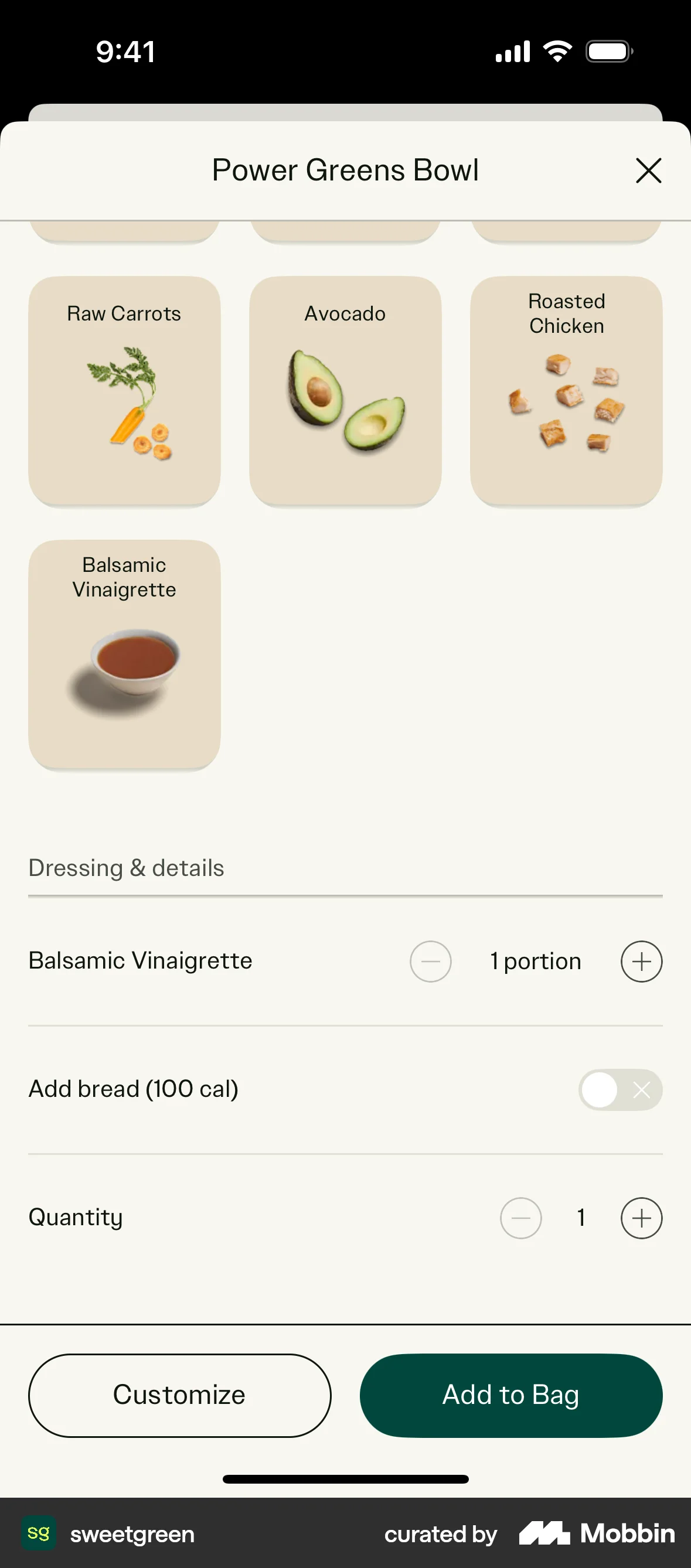
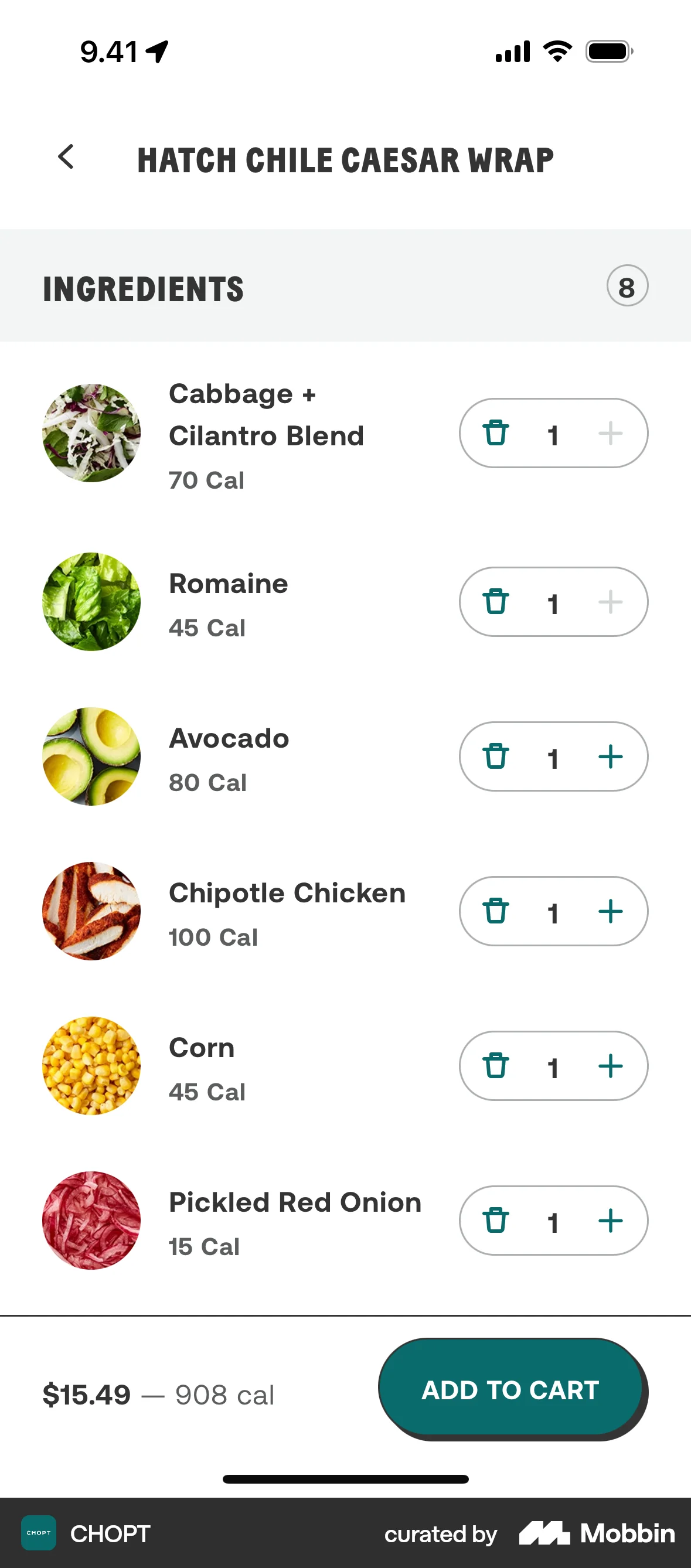
- Open the creation flow on a template gallery instead of a blank canvas, and leave at least one dimension genuinely free to edit. Templates protect against the ugly-outcome failure mode; the free dimension is what produces the perceived contribution that predicts value.
- Let the user name and arrange what they built: a named project, a reordered dashboard, a saved view, a seeded playlist, a configured notification schedule. Show it back afterwards with the name they gave it.
- Save configurator state on every step and return people to the step they left, not to step one. An abandoned build is the one case where the work was spent and no value was created.
- Never reset what the user made on their behalf — no cleared form after a validation error, no default layout restored by an update, no migration that drops custom fields. Destroying a completed build wiped out the premium in the lab.
- Count the artifact, not the labour: twelve rules configured, four members in the workspace, rather than the minutes spent setting it up.
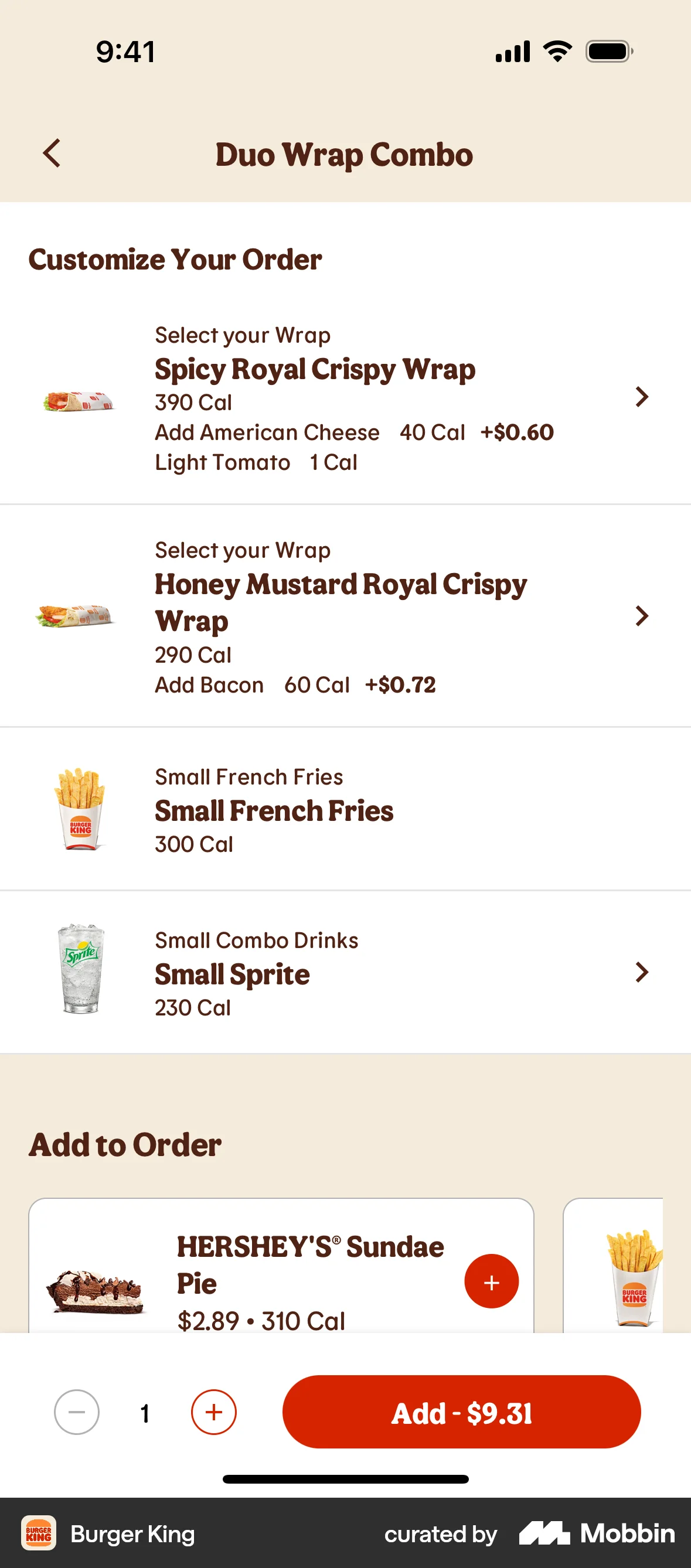
- Make every choice change something visible in the result. If the output looks the same whichever option the user picked, they filled in a form rather than contributed.
- Put a one-click sensible default next to the configure path and never gate first value behind the build, because in prospect most people choose pre-assembled.
What to avoid
- Manufactured busywork. Steps that exist to create attachment rather than to produce something are the anti-pattern, and the evidence does not even support them: effort itself does not raise valuation, completion and perceived contribution do.
- Configuration gates before first value. A long required setup wizard converts the effect's precondition — completion — into a drop-off risk, and users who quit mid-build get no benefit at all.
- Using competence threats as the hook. Copy that implies the user's current setup is inadequate will raise appetite for configuration (Mochon et al., Experiments 3A and 3B); doing it deliberately is manipulation, not motivation.
- Customisation as a switching cost. The ethical line is that what the user builds has to be worth building for them. If the only business case for a configuration step is that leaving becomes expensive, the step is a lock-in mechanism wearing the costume of personalisation.
- Trapping what the user made. Where EU law applies, this is not just an ethics question. Article 20(1) GDPR gives the user the right to receive personal data they provided in a structured, commonly used and machine-readable format and to transmit it to another controller without hindrance. Article 16(4) of the Digital Content Directive ((EU) 2019/770) goes further for non-personal content: on termination, at the consumer's request, the trader must make available any content provided or created by the consumer when using the digital content or service, free of charge, without hindrance, within a reasonable time and in a commonly used and machine-readable format. User-built templates, configurations and project data generally fall under that. Build the export before you build the configurator.
- Fake artifacts. A “your personalised setup” screen that reflects nothing the user actually chose is fabrication, and it fails on its own terms — the valuation comes from the real contribution.
Real-world examples
Measuring it
- Worked: completion rate of the build step, with retention and conversion reported separately for finishers and skippers rather than pooled across everyone who saw it.
- Worked: rate of return to the created artifact — reopened workspace, edited template — over the following weeks, not just the fact it was created.
- Backfired: abandonment inside the build step, time to first value, and drop-off between the step before it and the step after. If completion rate falls, you have manufactured the one condition under which the effect is absent.
- Backfired: cancellation and refund rates among users who completed the build. If the configuration is only raising exit cost, this is where it shows — people stay longer and leave angrier.
- Worth instrumenting: share of users who change anything beyond the defaults. Zero divergence means the step is producing no perceived contribution and should be replaced by a default.
References
- Norton, Mochon & Ariely (2012). The IKEA Effect: When Labor Leads to Love. Journal of Consumer Psychology.
- Mochon, Norton & Ariely (2012). Bolstering and Restoring Feelings of Competence via the IKEA Effect. International Journal of Research in Marketing.
- Franke, Schreier & Kaiser (2010). The “I Designed It Myself” Effect in Mass Customization. Management Science.
- Sarstedt, Neubert & Barth (2017). The IKEA Effect: A Conceptual Replication. Journal of Marketing Behavior.
- Marsh, Kanngiesser & Hood (2018). When and How Does Labour Lead to Love? The Ontogeny and Mechanisms of the IKEA Effect. Cognition.
- Oishi, Nakazawa, Takahashi, Kyutoku & Dan (2023). Visualizing the IKEA Effect: Experiential Consumption Assessed with fNIRS-Based Neuroimaging. Frontiers in Neuroergonomics.
- Atasoy & Morewedge (2018). Digital Goods Are Valued Less Than Physical Goods. Journal of Consumer Research.
- Regulation (EU) 2016/679 (GDPR), Article 20 — right to data portability.
- Directive (EU) 2019/770 on contracts for the supply of digital content and digital services, Article 16(4).
- Troy, E. Cake Mix Failure Marketing Legend (food history). CulinaryLore.
For agents
An agent-friendly guide to this principle lives at /agents/ikea-effect.md.
Our MCP server and skills for all principles are coming soon.
Similar principles
Disclaimer: The theories here are just that — theories. They may not apply universally and should be considered in context. Use your own judgment and consult additional sources when applying these principles.