Door-in-the-face
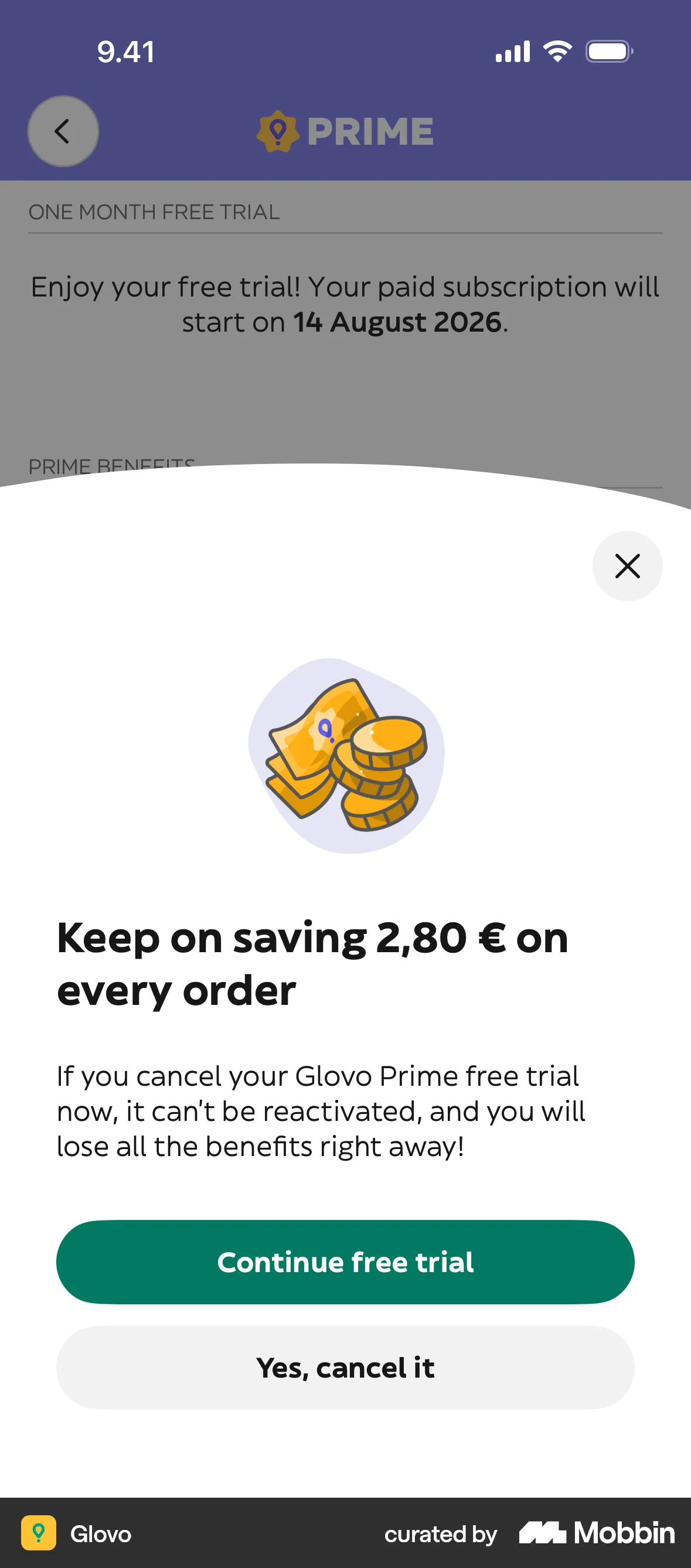
Door-in-the-face is the save offer's underlying claim: dropping from a large request to a small one reads as a concession, and reciprocity pushes the other person to concede back. In software it is the screen that appears after a user clicks cancel.
The original demonstration pairs a request nobody takes with one that sounds reasonable. Cialdini, Vincent, Lewis, Catalan, Wheeler and Darby (1975) asked students to counsel juvenile delinquents two hours a week for two years and, once refused, asked the same students to chaperone a group of those delinquents on a single zoo trip; the zoo request was accepted far more often after the refusal than when it was the only thing asked. The authors read that as reciprocal concessions: the requester gives ground, so the target gives ground back. Genschow and colleagues (2021) ran a direct replication in another country 45 years later, with the refusal-first condition beating both a target-request-only control and a small-first-request control at compliance rates similar to the original. For a compliance classic that is an unusually clean replication record, and it is the strongest thing this entry has.
Pooled, the effect is small and heavily conditional. Dillard, Hunter and Burgoon (1984) meta-analysed the sequential-request literature and put door-in-the-face at r = .15 and foot-in-the-door at r = .17, small even under optimal conditions, with two hard constraints: both worked only where the request was prosocial, and door-in-the-face worked only where the delay between the two requests was brief. They also concluded that reciprocal concessions — the mechanism the technique is named after — was seriously flawed as an account of the data, which is worth remembering before designing a flow around the idea that the user feels you have conceded something.
The split that matters for a product is between saying yes and doing the thing. Feeley, Anker and Aloe (2012) found door-in-the-face significant for verbal compliance (k = 78, r = .126) and not significant for behavioural compliance (k = 39, r = .052). Feeley's (2025) 50-year update puts verbal compliance at r = .14 across 89 comparisons and behavioural compliance at r = .08 across 53, with behavioural effects growing over the period, and reports the technique as more effective on student targets, where compliance in the control condition was low, and — for behaviour — where the request was for money rather than for volunteering. An agreement extracted in the moment is the part that replicates; the follow-through is the part that does not, which is precisely the gap between a user accepting a pause on the cancellation screen and that user still being worth anything a quarter later.
None of that record is about a company holding on to a subscription. The requests are charitable, the requester is a person in front of you, the two asks come seconds apart and share a beneficiary, and Feeley's moderator — the effect shrinks as control-condition compliance rises — points the wrong way in a cancel flow, where the person has already decided before the screen loads. There is no published controlled experiment on pause-before-cancel or on a downgrade offered at the exit, and the save rates quoted by subscription-platform vendors have no control group and no holdout. One fair alternative is cheap to offer, and its value has to be established by your own test.
What has been measured is how the pattern ships. Sheil, Acar, Schraffenberger, Gellert and Malone (2024) completed 67 subscriptions across 34 news sites in the US, UK, Netherlands and Germany, and found special offers or discounts to stay on 51.9% of the European sites and 77.8% of the US sites, with exit surveys on about 67.1% of European sites of which roughly 72.5% were mandatory, and on nearly every US site with 82.7% mandatory. Cancelling cost more clicks than subscribing everywhere: 3.5 against 4.9 for European sites accessed from Europe, 3.2 against 6.2 for US sites, 3.5 against 5.8 for US personas on US sites, and ten clicks for one chatbot-based flow. Luguri and Strahilevitz (2021) measured what that extra friction buys: 11.3% of their control group (73 of 644) accepted an identity-theft plan, against 25.8% under mild dark patterns (155 of 600) and 41.9% under aggressive ones (217 of 518) — which included a trick question and three forced information screens, not a concession. Anger in free-text responses ran at 5.70% in the control group, 6.09% in the mild condition and 12.82% in the aggressive one. Most of the lift available in a cancel flow is obstruction, and the aggressive version is bought with ill will.
The counter-offer can also push the user out. Ascarza, Iyengar and Schleicher (2016) ran a field experiment in which a mobile operator proactively recommended a cost-minimising plan: 6% of the control group churned in the following three months against 10% of the treatment group, which they attribute to lowered inertia to switch and to making past usage salient. Putting a cheaper plan in front of someone makes the whole question of whether to keep paying live again. That is the risk a downgrade offer carries, and it is invisible to a dashboard that counts saves on the cancellation screen.
The legal position moved recently and in both directions. The FTC's 2024 Negative Option Rule, which would have required cancellation to be at least as easy as the mechanism that obtained the consumer's consent, was vacated in full by the Eighth Circuit in Custom Communications, Inc. v. FTC in July 2025 and is not in force; the Commission then recodified the narrow pre-2024 prenotification rule, effective 12 February 2026. It has not retreated on the substance: its advance notice of proposed rulemaking of March 2026 asks directly whether it is unfair or deceptive to offer discounts or other incentives to stay enrolled — the FTC calls them Saves — instead of promptly honouring a cancellation request, and how much longer cancellation takes after a consumer declines one. ROSCA and section 5 still apply in the meantime, and the Prime case shows what that is worth: Amazon settled in September 2025 for $2.5 billion, a $1 billion civil penalty and up to $1.5 billion in redress, of which more than $845 million had been paid out by September 2026. In Germany, § 312k BGB requires a “Verträge hier kündigen” button that leads the consumer directly to a confirmation page carrying a “jetzt kündigen” button, so a save-offer interstitial between the two does not meet that standard — and only 37.5% of the German sites Sheil and colleagues tested cleared the two-step bar. Across the EU, Article 9(d) of the Unfair Commercial Practices Directive counts onerous or disproportionate non-contractual barriers to exercising a contractual right, termination included, towards harassment, coercion or undue influence, and no retention screen may gate the 14-day withdrawal right in Article 9 of the Consumer Rights Directive.
When it holds
- Prosocial requests only. The pooled estimate of r = .15 held where the request was prosocial; a retention offer made in the seller's own interest is the case the literature does not cover.
- Only with a short delay. Door-in-the-face was effective only when the gap between the two requests was brief, which is the one condition a cancel flow satisfies by construction.
- On agreement, not on behaviour. Verbal compliance was significant at r = .126 across 78 comparisons while behavioural compliance was not, at r = .052 across 39; the 50-year update puts them at .14 and .08.
- Weaker the more willing the audience already is. Effect sizes fell as compliance in the control condition rose, so a population that has already opened the cancellation page is the unfavourable end of that moderator.
- Larger on students, and for money rather than volunteering. Both are moderators in the 50-year review, and neither maps cleanly onto a paying subscriber.
- Not from a concession the user cannot see. The mechanism requires the second request to read as the requester giving ground, and Dillard and colleagues judged reciprocal concessions seriously flawed as an explanation even in the lab.
- It reverses when the alternative makes the decision live again. Recommending a cost-minimising plan raised three-month churn from 6% to 10% against a holdout.
- What looks like the effect in a cancel flow is often obstruction. Acceptance went from 11.3% to 25.8% under mild dark patterns and 41.9% under aggressive ones built from forced screens and a trick question, with free-text anger rising from 5.70% to 12.82%.
How to apply
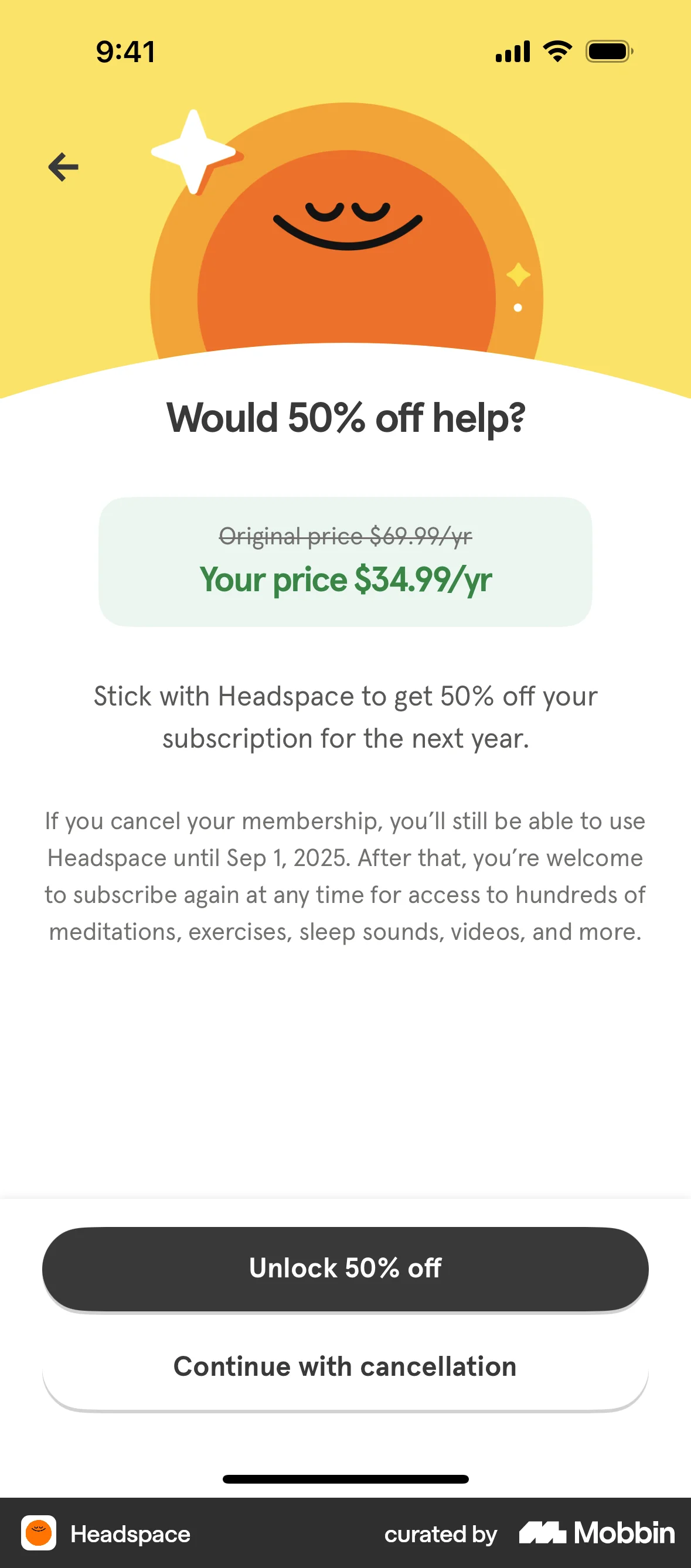
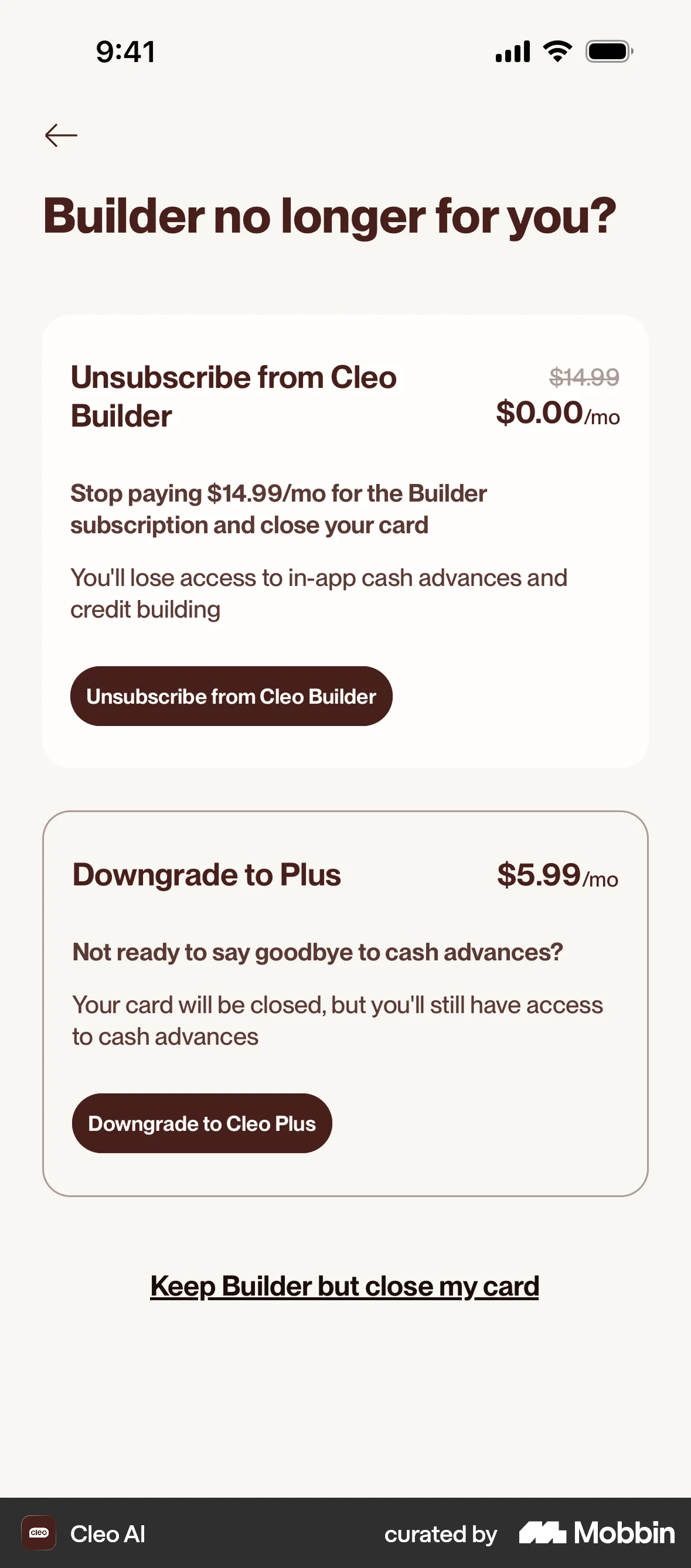
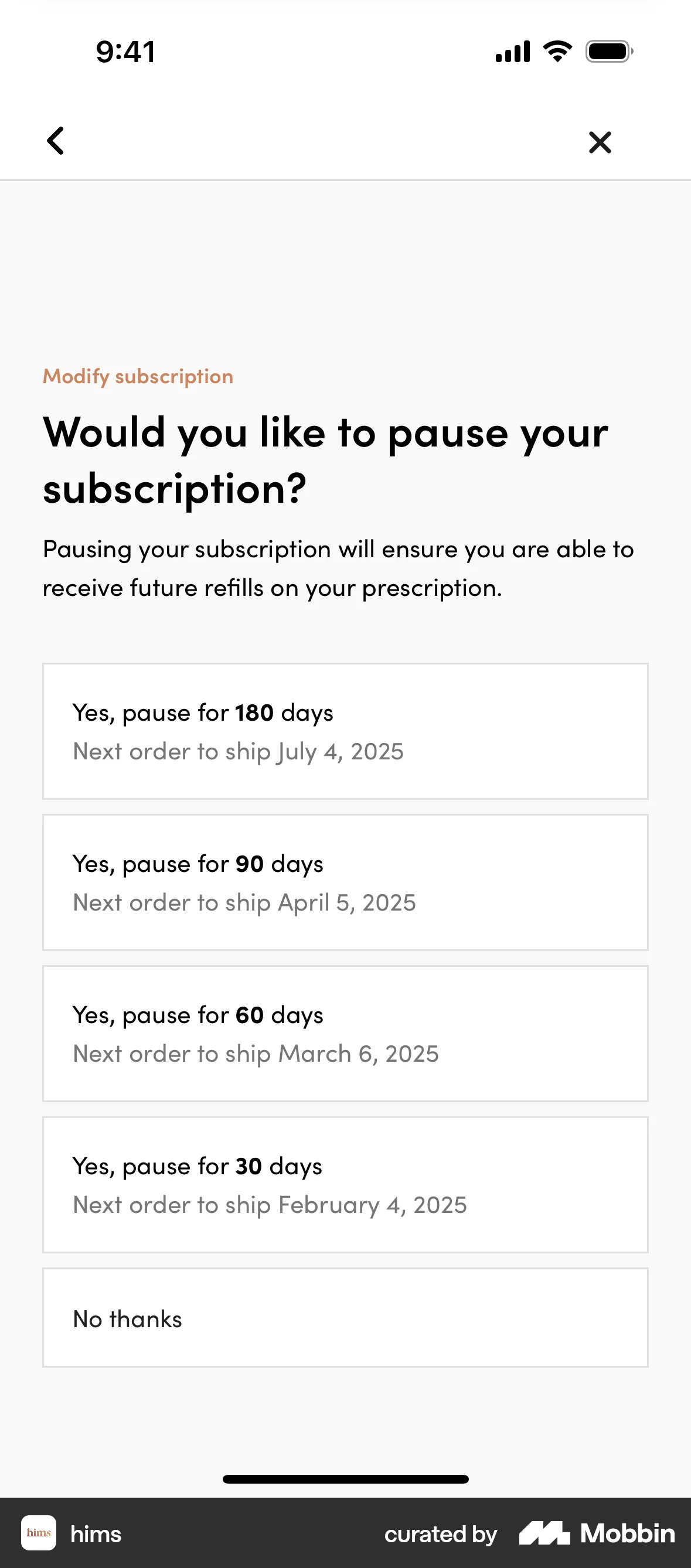
- Put at most one screen between the cancel control and the completed cancellation, carrying one alternative — pause, a cheaper tier, monthly instead of annual — with cancelling available on that same screen in equal visual weight.
- Make the alternative an actual reduction and state its terms on the screen: the new price, the date it starts, what the user loses. An offer that costs you nothing will not be read as a concession.
- Make declining complete the cancellation rather than open another screen, and confirm the end date and what happens to the data in the same place.
- Record the decline against the account and suppress the offer on any later cancellation. The FTC's open rulemaking asks how much longer cancellation takes after a consumer declines a save, so one offer, once, is the defensible answer.
- Route German consumers past the save screen rather than through it: § 312k BGB requires “Verträge hier kündigen” to lead directly to the confirmation page and its “jetzt kündigen” button.
- Ship pause as a real state, not a holding pen: a chosen length, a visible resume date, automatic resumption, and cancelling still one tap away while paused.
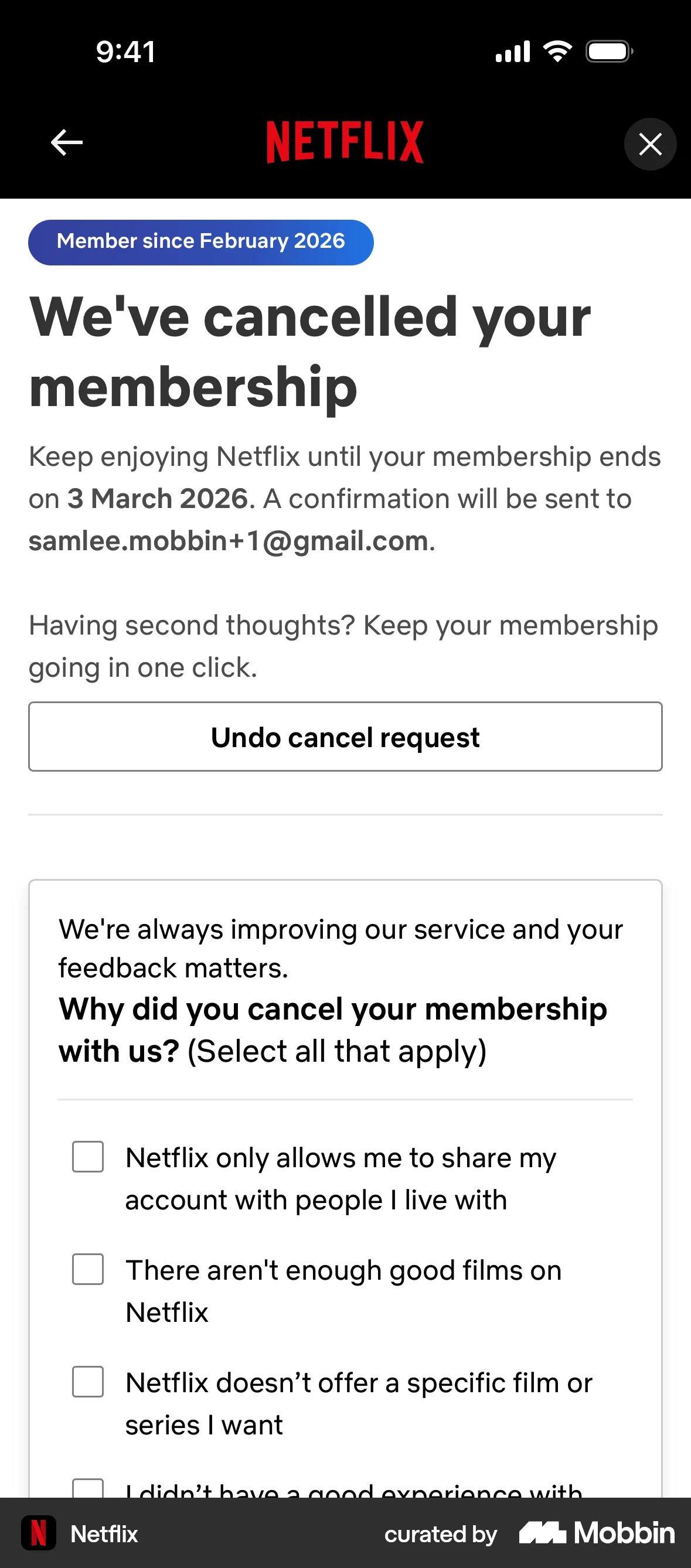
- Make the exit survey skippable with a visible control, or drop it. Roughly 72.5% of European and 82.7% of US flows that showed a survey made answering mandatory, which is a barrier rather than research.
- Expose the downgrade in settings as well as at the exit, and prefer the settings placement. A user finding a cheaper plan is retention; putting it in front of them unprompted raised churn in the one field experiment that tested it.
What to avoid
- Stacking counter-offers until the user gives up. The FTC alleged Amazon routed consumers through multiple pages presenting several discounted continuation offers; the September 2025 settlement was $2.5 billion, including a $1 billion civil penalty.
- Making cancellation cost more than sign-up did. Cancelling took 4.9 clicks against 3.5 to subscribe on European sites and 6.2 against 3.2 on US sites, and the vacated 2024 FTC rule would have required parity — the substance is still live under ROSCA, section 5 and the Commission's 2026 rulemaking.
- Routing an online subscription to a phone call or a chatbot to cancel. One chatbot flow in the same study took ten clicks for every persona, and four of 67 subscriptions could not be cancelled online at all.
- Disproportionate barriers to exit anywhere in the EU. Article 9(d) of Directive 2005/29/EC counts onerous or disproportionate non-contractual barriers to exercising a contractual right, including termination, towards harassment, coercion or undue influence.
- Ambiguous or shaming decline wording. The aggressive condition that pushed acceptance to 41.9% leaned on a confirm-your-refusal prompt whose answers were “No, cancel” and “Yes”, and it also doubled expressed anger.
- Conditioning a statutory right on hearing the offer. Article 9 of Directive 2011/83/EU gives consumers 14 days to withdraw from a distance service contract without giving a reason, which no retention screen may gate.
- Quoting vendor save rates as evidence that a pause offer works. There is no published controlled test of pause-before-cancel; the figures in circulation are self-reported and have no holdout.
Real-world examples
Measuring it
- Primary metric: retained revenue per user entering the cancel flow at three and six months, randomising the offer against a no-offer arm. The acceptance rate on the screen is the verbal-compliance number, and that is the one the meta-analyses say overstates behaviour.
- Secondary: resume rate and first payment after a pause ends. A pause that never resumes is a cancellation with a delay, and it should be counted as one.
- Backfire metric: churn across the whole exposed population against a holdout that never saw the offer, with downgrade take-up read off the same comparison. A plan recommendation raised three-month churn from 6% to 10%, and cannibalised full-price subscriptions show up as saves.
- Backfire metric: time and steps from the cancel control to a confirmed cancellation, split by whether the offer was declined. This is the measure the FTC's 2026 notice asks about, so it is worth having before you are asked.
- Backfire metric: cancellation complaints, chargebacks and app-store reviews mentioning the exit. Aggressive patterns doubled expressed anger (12.82% against 5.70%) while converting, so satisfaction and conversion move in opposite directions here.
References
- Cialdini, Vincent, Lewis, Catalan, Wheeler & Darby (1975). Reciprocal Concessions Procedure for Inducing Compliance: The Door-in-the-Face Technique. Journal of Personality and Social Psychology.
- Dillard, Hunter & Burgoon (1984). Sequential-Request Persuasive Strategies: Meta-Analysis of Foot-in-the-Door and Door-in-the-Face. Human Communication Research.
- Feeley, Anker & Aloe (2012). The Door-in-the-Face Persuasive Message Strategy: A Meta-Analysis of the First 35 Years. Communication Monographs.
- Feeley (2025). 50-Year Review of the Door-in-the-Face Message Strategy. Communication Monographs.
- Genschow, Westfal, Crusius, Bartosch, Feikes, Pallasch & Wozniak (2021). Does Social Psychology Persist Over Half a Century? A Direct Replication of Cialdini et al.'s (1975) Classic Door-in-the-Face Technique. Journal of Personality and Social Psychology.
- Ascarza, Iyengar & Schleicher (2016). The Perils of Proactive Churn Prevention Using Plan Recommendations: Evidence from a Field Experiment. Journal of Marketing Research.
- Sheil, Acar, Schraffenberger, Gellert & Malone (2024). Staying at the Roach Motel: Cross-Country Analysis of Manipulative Subscription and Cancellation Flows. CHI '24.
- Luguri & Strahilevitz (2021). Shining a Light on Dark Patterns. Journal of Legal Analysis.
- Custom Communications, Inc. v. FTC, 142 F.4th 1060 (8th Cir. 2025), filed 8 July 2025: the 2024 Negative Option Rule is vacated for failure to issue a preliminary regulatory analysis.
- FTC (2026). Revision of the Negative Option Rule ... To Conform These Rules to Federal Court Decisions, 91 FR 6507, effective 12 February 2026: 16 CFR part 425 recodified as it stood before the 2024 rule.
- FTC (2026). Rule Concerning the Use of Prenotification Negative Option Plans: advance notice of proposed rulemaking, 13 March 2026, asking whether offering Saves instead of promptly honouring a cancellation request is unfair or deceptive.
- FTC (2023). FTC Takes Action Against Amazon for Enrolling Consumers in Amazon Prime Without Consent and Sabotaging Their Attempts to Cancel: the complaint's account of multiple pages of discounted continuation offers.
- FTC (2026). FTC Announces Additional Payments to Consumers Stemming from FTC's Amazon Prime Settlement: $2.5 billion total, $1 billion civil penalty, more than $845 million paid as of September 2026.
- § 312k BGB: cancellation button for consumer contracts concluded online, leading directly to a confirmation page, with termination at any time where it is missing.
- Directive 2005/29/EC (Unfair Commercial Practices), Article 9(d): onerous or disproportionate non-contractual barriers to exercising contractual rights, including termination.
- Directive 2011/83/EU on consumer rights, Article 9: 14 days to withdraw from a distance or off-premises contract without giving any reason.
For agents
An agent-friendly guide to this principle lives at /agents/door-in-the-face.md.
Our MCP server and skills for all principles are coming soon.
Similar principles
Disclaimer: The theories here are just that — theories. They may not apply universally and should be considered in context. Use your own judgment and consult additional sources when applying these principles.