Regret aversion
Regret is the pain of comparing what you got with what you turned down. Anticipating it shifts the choice, but only when the rejected option's outcome is going to become knowable.
Bell (1982) and Loomes and Sugden (1982) formalised the same idea independently: an outcome's value is the outcome set against what the rejected alternative would have produced. That counterfactual separates this principle from the two it is confused with. Loss aversion needs only a reference point, something you hold that an action would take away; status quo bias needs only inaction to be available. Regret needs a rejected option whose fate can be compared with yours, so it turns on information rather than on ownership or inertia. Whether your product later tells the user what the other path would have given them decides whether this principle applies at all.
That switch has been tested directly. Zeelenberg, Beattie, van der Pligt and de Vries (1996) gave 78 undergraduates a safe and a risky gamble matched for attractiveness, then varied only which gamble's outcome they would be told afterwards. Participants were more risk-seeking when feedback was promised on the risky gamble and more risk-averse when it was promised on the safe one, with the choice-only condition in between; a third experiment with real money reproduced the direction. People choose the option that spares them from learning what they missed, so a screen that reveals the forgone outcome pushes behaviour toward the revealed branch.
That paradigm has been picked apart by its own builders, and Bleichrodt and Wakker's (2015) retrospective records both halves. Loomes and colleagues found the preference cycles regret theory predicts far more common than the reverse, but Day and Loomes (2010) found the cycle the theory forbids prevailing, several independent groups report “similarity cycles” it cannot produce, and Harless (1992) concluded that regret effects are primarily framing effects that “occur only when the decision is framed in a way that sharply directs the decision maker to compare acts and states”. Starmer and Sugden (1993) landed the sharpest blow: much of the earlier support turned out to be an event-splitting effect, present in the two problems where splitting also predicted it and absent in the two where it did not. That puts the effect in explicit side-by-side comparison — what a plan grid or a checkout summary is, and a paragraph of marketing copy is not.
The correlational base is large and independent of that paradigm. Sandberg and Conner (2008) meta-analysed anticipated regret as an addition to the theory of planned behaviour: r+ = .47 with intention across 25 studies and 11,254 people, r+ = .28 with later behaviour, and a contribution independent of the model's existing predictors. Brewer, DeFrank and Gilkey (2016) pooled 81 studies, 45,618 participants and 128 effect sizes and landed in the same place, r+ = .50 with intention and r+ = .29 with behaviour. The signs split by direction, which is what matters for a build: inaction regret went with stronger intentions (r+ = .52) and more behaviour (r+ = .29), action regret with weaker intentions (r+ = −.45) and less behaviour (r+ = −.28). Their own limitation section is blunt — 58% of the studies were cross-sectional, 74% used convenience samples, and “the correlational designs widely used in the studies precludes strong causal inference”. Their pilot work also suggested direct regret appeals might elicit reactance, so they put the construct in a quote from a local parent rather than aiming it at the reader.
Prompting regret deliberately makes people buy sooner, not hesitate. Simonson (1992) ran 218 undergraduates through a purchase-timing scenario: buy the wedding gift in the July sale or wait for August, at a store with no returns on sale items. Asked first which mistake would upset them more, 63% chose July against 54% in control, and the better-known, higher-priced brand took 67% of choices against 50%. Two null controls matter as much: telling people they would learn which option had been better, and telling them their decisions would be rated, moved nothing significant. The lever is anticipating the feeling, and it points at immediate purchase and at the safe brand — in hypothetical student scenarios, so the direction is instructive and the sizes are not.
The field record is thinner. Sandberg and Conner (2009) sent 4,277 women a cervical screening invitation; attendance was 21% in control, 26% among those who also got a theory-of-planned-behaviour questionnaire and 26% among those who got that questionnaire plus anticipated regret items. The regret items added nothing over asking the questions at all, and the quoted 65% against 44% advantage exists only inside the self-selected subset who returned their questionnaire, and only among strong intenders. Haisley, Volpp, Pellathy and Loewenstein (2012) got a larger result from structure rather than wording: across 1,299 employees in 14 offices, health risk assessment completion was 64% under a team lottery where non-participants learn whether they would have won, against 44% for a $50 grocery certificate and 40% for the existing $25 payment. That design confounds regret with peer pressure and a different enrolment procedure on purpose.
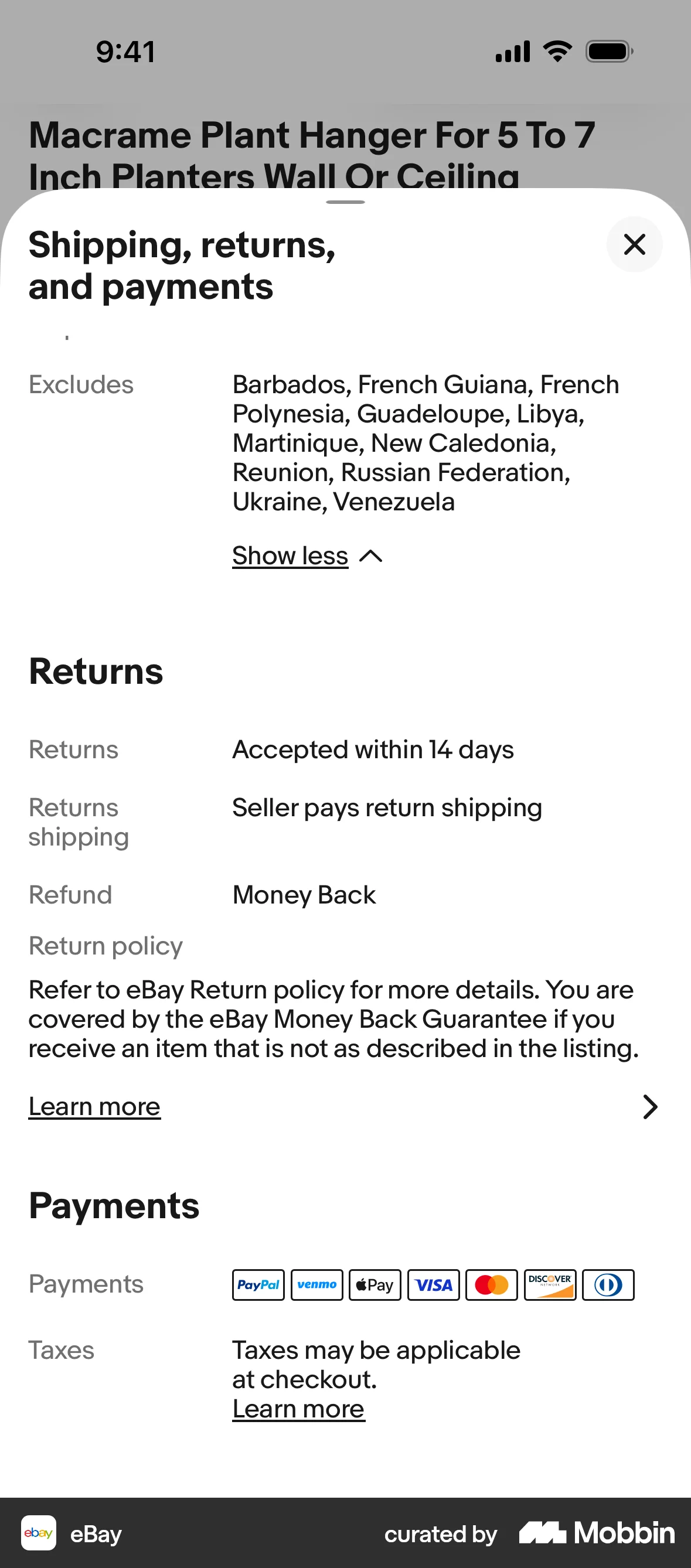
Regret aversion earns its place in a product on the other side: lowering what the user stands to regret. Janakiraman, Syrdal and Freling (2016) meta-analysed 21 papers on return policy leniency: leniency raises purchases more than it raises returns, and the five dimensions pull differently, with money and effort leniency increasing purchases, scope leniency increasing returns, time and exchange leniency reducing them. Suwelack, Hogreve and Hoyer (2011) found a money-back guarantee raises purchase intention and willingness to pay a price premium, and that guarantees on experience goods need stricter return conditions than on search goods. Petersen and Kumar (2015) ran the field version with 26,000 customers over six months: a satisfactory return experience lowers perceived risk on current and future purchases rather than being a pure cost. Lowering the stakes also changes who walks in: trial-acquired customers had average customer lifetime value 59% lower than regular customers, while responding more strongly to marketing and to usage (Datta, Foubert and Van Heerde 2015). A trial needs its own cohort, not the same forecast.
The action-versus-inaction story that usually accompanies this principle is its weakest part. Spranca, Minsk and Baron (1991) found harmful omissions rated less immoral than harmful commissions, with no mirror-image effect for good outcomes. But the famous claim that we regret inactions more over a lifetime rests on Gilovich and Medvec (1994): 84% of 32 adults named an inaction as their bigger long-term regret. Richardson and Gilovich (2023) re-ran it with 2,600 usable cards: the short-term pattern replicated, 58% naming an action against 42% an inaction, and the long-term result did not, 51% action against 49% inaction, p = .35. Roese and Summerville (2005) had already reframed the pattern as opportunity rather than inaction — pooling 11 datasets and 4,054 regrets, education was the top regret at 32.2%, and high-opportunity life domains produced more intense regrets than low-opportunity ones (d = .21), while framing manipulations at the point of recall did nothing consistent (d = −.02). Regret follows the door that is still open better than it follows inaction. The record overall: two meta-analyses agreeing on direction and size, one clean experiment on the moderator that matters for software, a contested lab paradigm, no causal evidence from a product interface, and one evidenced lever that is structural — returns, guarantees, reversibility — not regret-framed copy.
When it holds
- Expected feedback on the rejected option is the switch, and it sets the direction: holding attractiveness constant, participants were more risk-seeking when the risky gamble's outcome would be revealed and more risk-averse when the safe one's would be (Zeelenberg et al. 1996). If your product never shows what the other plan, filter or bid would have returned, there is no regret to anticipate.
- It needs an explicit comparison of options and outcomes: regret effects were judged primarily framing effects that occur only when the decision is framed to direct attention to comparing acts and states (Harless 1992, quoted in Bleichrodt and Wakker 2015), and much of the earlier support turned out to be event-splitting (Starmer and Sugden 1993). A plan grid qualifies; a sentence of body copy does not.
- Action and inaction regret have opposite signs, so the frame decides the direction: inaction regret went with stronger intentions (r+ = .52) and action regret with weaker ones (r+ = −.45) across 128 effect sizes (Brewer et al. 2016).
- Anticipated action regret weakens for rare, mild and distant consequences: intentions r+ = −.29 for less frequent behaviours against −.52 for more frequent, −.36 for less severe hazards against −.55, and −.37 for more distal against −.53 (Brewer et al. 2016). Most product decisions are rare, mild and distant.
- Return leniency works dimension by dimension, not as one dial: money and effort leniency increase purchases, scope leniency increases returns, time and exchange leniency reduce returns (Janakiraman et al. 2016).
- Guarantees need tighter terms on experience goods than on search goods (Suwelack et al. 2011), so the same return window is not the right policy across a mixed catalogue.
- Prompts underperform in the field. Adding anticipated regret items to a screening invitation produced 26% attendance against 26% for the plain questionnaire on an intention-to-treat basis, and the advantage appeared only among questionnaire returners who were already strong intenders (Sandberg and Conner 2009).
- Removing the risk changes the cohort, not only the conversion rate: free-trial customers' average customer lifetime value was 59% lower than regular customers' (Datta et al. 2015).
- Undo is the pattern this principle is most often invoked to justify and the one with no evidence located here. No controlled study of undo, grace periods or soft delete in an interface surfaced in this research; treat those as sound engineering with an untested conversion claim.
How to apply
- Decide, for each commitment in the product, whether the screen will later show what the rejected option would have given — the forgone price, the plan not picked, the bid that won. That reveal is the mechanism, and in the one clean experiment it moved choice toward whichever branch would be revealed.
- Put the reversal terms on the commitment screen itself rather than behind a policy link: the window in days, who pays to send it back, and what state survives. Comparison in one view is the condition under which regret effects appear at all, and in the EU this disclosure is also compulsory.
- Be generous on money and effort, strict on scope: prepaid labels, no restocking fee and a one-tap return request, without widening what is eligible. Those are the dimensions that raised purchases, against the one that raised returns.
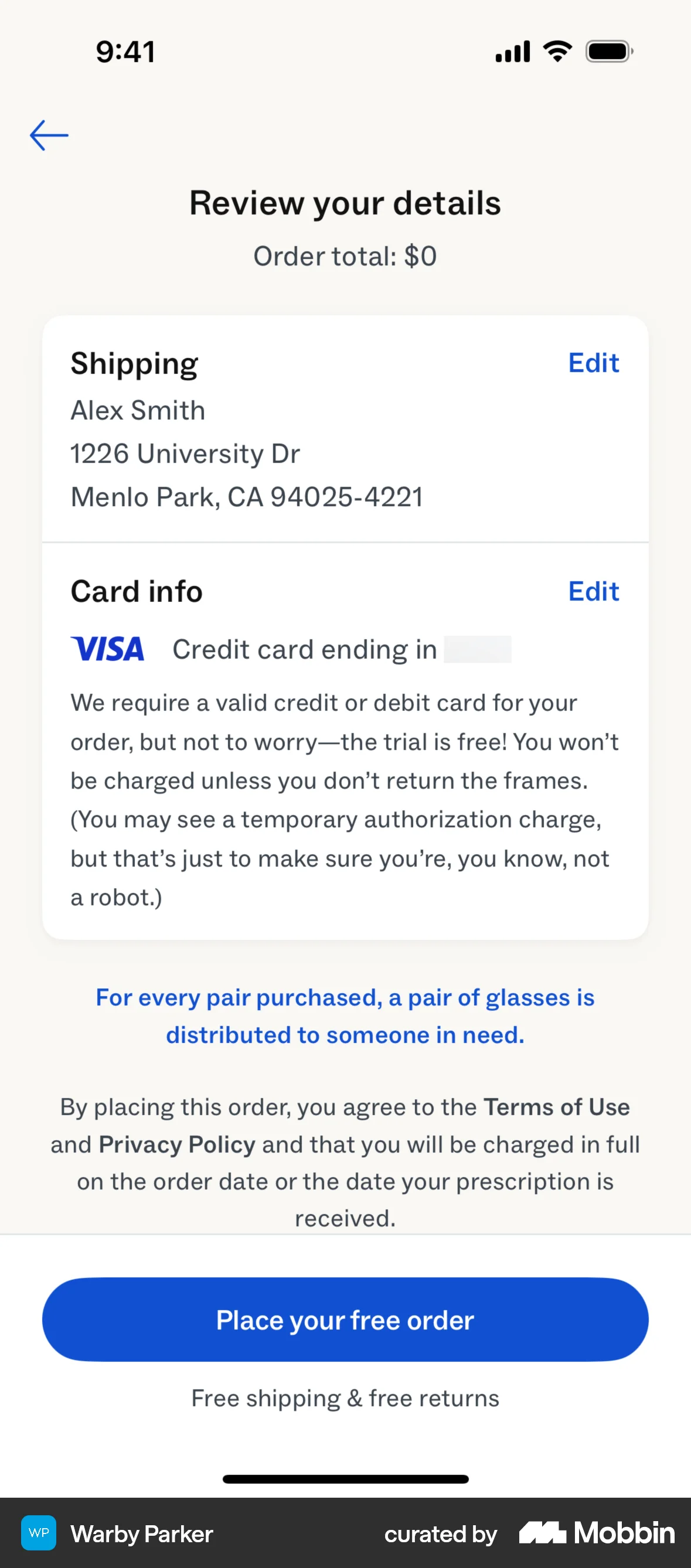
- Run trials without a card where you can, and print the charge date, the amount and the cancel path beside the signup button. If a card is required, the US rule for online negative-option sales requires clear disclosure of material terms before you take it, express informed consent, and a simple way to stop the charges.
- Mark the permanent setup choices at first run — workspace URL, region, currency — and label the rest as changeable later, next to the control rather than in a footnote. Rare, reversible, mild consequences are exactly where anticipated regret is weakest, so the job is to tell the user which decisions those are.
- Replace destructive confirmation modals with the action plus a stated undo window — “deleted, undo for 30 seconds” — and keep the data recoverable for a named number of days after cancellation. Treat the conversion benefit as a hypothesis: the pattern is standard practice, not a measured effect.
- Put pause and downgrade beside cancel and state what each one keeps. The evidenced lever in a cancellation flow is structural reversibility, not a warning about what the user will miss.
- If you use the inaction side — the better-evidenced direction — keep the message to a fact the user can check: the real deadline, the real price change, the real consequence. Direct regret appeals elicited reactance in the one pilot that reports trying them.
What to avoid
- Manufacturing the missed opportunity. Falsely stating that a product will be available only for a limited time, or only on particular terms for a limited time, to elicit an immediate decision and deprive consumers of time to make an informed choice is banned in all circumstances under paragraph 7 of Schedule 20 of the UK's Digital Markets, Competition and Consumers Act 2024, with the equivalent entry in the EU blacklist. A timer that resets on reload is this practice.
- Keeping the withdrawal right out of the purchase flow. Under Article 9 of Directive 2011/83/EU consumers have 14 days to withdraw from a distance contract without giving a reason, and under Article 10 failing to give them the required withdrawal information extends that period by 12 months. Hiding the policy to protect the return rate buys a year of open-ended refunds.
- Selling a free trial with no simple way out. 15 U.S.C. § 8403 requires clear and conspicuous disclosure of all material terms before billing information is taken, express informed consent before charging, and simple mechanisms to stop recurring charges.
- Telling the user what they will regret. The only pilot work reported on direct anticipated-regret appeals found they might elicit reactance, which is why the authors moved the construct into a third-party quote instead.
- Quoting “we regret inaction more” as settled. The claim comes from 32 adults, and the 2,600-response replication by one of the original authors reproduced the short-term action effect and not the long-term inaction one (51% against 49%, p = .35).
- Counting a lenient-returns or free-trial lift as the whole result. Free-trial customers' average lifetime value was 59% lower, so a conversion win can be a cohort you then have to work harder to keep.
- Loosening scope to look generous. Of the five leniency dimensions, scope is the one that raised return rates; time and exchange leniency lowered them.
Real-world examples



Measuring it
- Primary metric: purchase, activation or upgrade rate in a randomised arm that changes only a reversal term — window length, who pays return shipping, card required or not, undo available or not. The evidence is about policy structure, so test the policy, not the sentence describing it.
- Secondary: returns, refunds and in-window cancellations alongside it, and net contribution after reversal cost. The meta-analytic finding is that purchases and returns both rise and purchases rise more, which is only a win if you are measuring both.
- Secondary, split by leniency dimension: return rate against money, effort, time, scope and exchange terms separately, since they move in opposite directions and a single leniency score hides the effect.
- Backfire metric: retention and lifetime value by acquisition cohort — trial against direct, lenient-returns against standard — at 6 and 12 months. The published gap for trial-acquired customers was 59% lower CLV.
- Backfire metric: reactance signals on any regret-framed or deadline message — unsubscribes, complaints, support contacts, and conversion among low-intent users specifically, since the one field prompt only moved strong intenders. Track undo rate beside them: frequent undo is a reversal working, frequent undo plus a support ticket is the primary flow misfiring.
References
- Bell (1982). Regret in Decision Making under Uncertainty. Operations Research.
- Loomes & Sugden (1982). Regret Theory: An Alternative Theory of Rational Choice Under Uncertainty. The Economic Journal.
- Bleichrodt & Wakker (2015). Regret Theory: A Bold Alternative to the Alternatives. The Economic Journal.
- Zeelenberg, Beattie, van der Pligt & de Vries (1996). Consequences of Regret Aversion: Effects of Expected Feedback on Risky Decision Making. Organizational Behavior and Human Decision Processes.
- Simonson (1992). The Influence of Anticipating Regret and Responsibility on Purchase Decisions. Journal of Consumer Research.
- Sandberg & Conner (2008). Anticipated Regret as an Additional Predictor in the Theory of Planned Behaviour: A Meta-analysis. British Journal of Social Psychology.
- Brewer, DeFrank & Gilkey (2016). Anticipated Regret and Health Behavior: A Meta-analysis. Health Psychology.
- Sandberg & Conner (2009). A Mere Measurement Effect for Anticipated Regret: Impacts on Cervical Screening Attendance. British Journal of Social Psychology.
- Haisley, Volpp, Pellathy & Loewenstein (2012). The Impact of Alternative Incentive Schemes on Completion of Health Risk Assessments. American Journal of Health Promotion.
- Janakiraman, Syrdal & Freling (2016). The Effect of Return Policy Leniency on Consumer Purchase and Return Decisions: A Meta-analytic Review. Journal of Retailing.
- Suwelack, Hogreve & Hoyer (2011). Understanding Money-Back Guarantees: Cognitive, Affective, and Behavioral Outcomes. Journal of Retailing.
- Petersen & Kumar (2015). Perceived Risk, Product Returns, and Optimal Resource Allocation: Evidence from a Field Experiment. Journal of Marketing Research.
- Datta, Foubert & Van Heerde (2015). The Challenge of Retaining Customers Acquired with Free Trials. Journal of Marketing Research.
- Spranca, Minsk & Baron (1991). Omission and Commission in Judgment and Choice. Journal of Experimental Social Psychology.
- Gilovich & Medvec (1994). The Temporal Pattern to the Experience of Regret. Journal of Personality and Social Psychology.
- Richardson & Gilovich (2023). A Very Public Replication of the Temporal Pattern to People's Regrets. Royal Society Open Science.
- Roese & Summerville (2005). What We Regret Most… and Why. Personality and Social Psychology Bulletin.
- Directive 2011/83/EU (Consumer Rights Directive), Article 9 — 14-day right of withdrawal for distance contracts.
- Directive 2011/83/EU (Consumer Rights Directive), Article 10 — omission of withdrawal information extends the period by 12 months.
- 15 U.S.C. § 8403 — negative option requirements for online sales.
- Digital Markets, Competition and Consumers Act 2024, Schedule 20, paragraph 7 (UK banned practices).
For agents
An agent-friendly guide to this principle lives at /agents/regret-aversion.md.
Our MCP server and skills for all principles are coming soon.
Similar principles
Disclaimer: The theories here are just that — theories. They may not apply universally and should be considered in context. Use your own judgment and consult additional sources when applying these principles.