Streak effect
A displayed run becomes a goal of its own, separate from the behaviour it counts. What moves the next action is the log, not the chain: the same four sessions produce different choices depending on whether the interface shows them as intact or broken.
A streak is a count of consecutive periods in which the user did the thing, shown back to them. The only randomised field test of it measured notification copy rather than a counter. Aulagnon, Cristia, Cueto and Malamud (2025) split 60,000 Peruvian fourth- to sixth-graders on a maths platform into four arms for six summer weeks: messages highlighting their streak of completed weekly assignment sets, personalised reminders with positive reinforcement, generic reminders, and nothing. The bases were low: 5.3% of controls opened the platform at all, and those who did connected in 31.7% of weeks. Streak messages raised connecting at least once by 2.8 percentage points, behind personalised reminders at 3.8 and ahead of generic ones at 1.4, and raised the share of weeks connected by 9.4 points, ahead of 6.9 and 2.5. Learning barely moved: among the 2.3% who sat the endline test the streak arm scored 0.13 to 0.17 standard deviations above control, with no arm differing from another. Effects landed on the days the messages went out. The streak framing won depth of return and lost reach, and it counted weeks, not days.
The causal core is one set of seven lab studies, and its finding is that the display does the work. In Silverman and Barasch's (2023) Study 2, participants all completed the same four strength exercises in an app; those whose fourth log succeeded saw an intact run of four, those told the log had failed to load saw an “X”. Asked to choose their next activity, 66.23% of the intact group stayed with strength work against 57.86% of the broken group — identical behaviour, different counter, different next action. Study 3 crossed intact or broken with whether a log was shown at all, the condition design turns on. Highlighting an intact streak raised continuation to 92.47% from 64.94% unlogged; highlighting a broken one cut it to 45.21% from 60.90% unlogged. The counter does not fail safe. It points wherever the last period went.
The no-log comparisons are the weak half of the record, and the authors say so. Study 4 ran intact 65.84%, no log 54.73%, broken 47.98%, with intact beating no log but broken only directionally below it; Study 5 ran 82.55%, 77.78% and 67.92%, with the broken-versus-no-log contrast marginal and the intact one not significant. Neither contrast was powered, and which half reached significance flipped between the two. The mechanism tests are more consistent: sense of accomplishment mediated the effect (indirect effect .49, 95% CI [.25, .82]) and negative emotion did not (.11, 95% CI [−.07, .32]), even though the broken group reported far more of it. Felt progress moved behaviour, not fear of loss, which makes loss-framed streak copy the least supported thing a team usually builds first.
Two findings about breaks are the practical payload. In Study 6, blame changed the size of the drop: 53.17% continued with an intact streak, 42.00% when the break was attributable to the app's quota message, and 28.87% when participants had chosen the behaviour that broke it. In Study 7, offering repair recovered most of the damage — intact 93.14%, repairable break 85.20%, plain break 68.66%. The field messages behaved accordingly: the cell for a student who had not connected said they could reach three consecutive weeks today, never that they had lost anything, and runs of consecutive non-use were no longer in the streak arm than in the reminder arm. Willingness to protect a run is also its commercial risk — 45% of Study 6 participants would watch an advertisement to keep a streak and 43% to repair one, and Duolingo already sells a freeze.
Two popular beliefs have no support. Length is not a dial: three logged behaviours against six, and four against twenty, both reproduced the intact-versus-broken effect with no interaction with length, so the goal looks roughly categorical over the range tested and nothing is known above twenty. Making the log public added nothing measurable — 55.78% against 43.85% overall, with no interaction with whether the log would be shared. And the figure product write-ups quote most means least. Silverman and Barasch's own field study of 980 university employees in a 30-day 7,000-step challenge found that an intact run predicted meeting the goal that day even controlling for each person's overall completion rate, but it is correlational, and they say plainly it cannot separate the streak from whatever made certain people both likely to hold one and likely to keep using the app. A chart showing long-streak users retaining better is that confound.
The habit story does not survive contact with the habit literature. Lally, van Jaarsveld, Potts and Wardle (2010) had 96 volunteers repeat a self-chosen daily behaviour in a fixed context for 84 days; an asymptotic curve fitted 62 of them and fitted well for 39, with a median 66 days to 95% of the automaticity plateau and a range of 18 to 254. Across 140 missed days automaticity fell by 0.29 of a point on the self-report habit index, and the gain across an omission (.55) was indistinguishable from the gain across three consecutive days (.79), with no longer-term cost. One missed day costs almost nothing behaviourally while an interface that resets to zero charges the user everything; Khan Academy withdrew its streak in January 2021 on that reasoning, saying that as designed streaks can be demotivating when something outside the learner's control breaks them. Attached to money the mechanism is better evidenced: Mehr, Silverman, Sharif, Barasch and Milkman (2025) report across six preregistered studies (N = 4,493) that people completed more work for streak incentives — rising payouts for consecutive tasks — than for larger flat ones, and that the consecutiveness requirement rather than the escalating amount carried it, which buys the lift and the overjustification problem together.
The honest state of it: no published randomised test of an in-app streak counter exists, and none of a streak freeze. One field experiment tested streak-framed notifications, the causal studies are single-session choices on Mechanical Turk, and the one field test of streak feedback inside a consumer app — Hillegass, Silverman, Gershon, Riedel, Grüning and Wolf's working paper on a self-control app — reports in its seminar abstract that the streak became a competing goal and social-media use went up, which we could not verify in the paper itself. Duolingo's widely repeated figures are company-reported with no method published and should not be cited as evidence. Evidence of harm is correlational: among 2,483 Belgian early adolescents, van Essen and Van Ouytsel (2023) found problematic smartphone use associated with maintaining Snapchat streaks, with weak correlations between fear of missing out, self-control and the number of streak partners and days; Hristova and colleagues (2022) interviewed 25 pupils aged 14 to 18 and found maintenance becoming an obligation negotiated between friends. Regulators have begun to classify the family: the Spanish data protection authority's 2024 guide lists streaks and “perfect week” rewards among addictive patterns, and the European Parliament's resolution of 12 December 2023 asks the Commission to turn attention-seeking features off by design. Build the counter, build the repair with it, and treat anything you read about long streaks as a claim about the kind of person who has one.
When it holds
- The run has to be displayed, and it cuts both ways. Identical behaviour produced 92.47% continuation with an intact streak logged against 64.94% unlogged, and 45.21% with a broken streak logged against 60.90% unlogged, so an average across a user base hides the negative half.
- A repair restores most of the loss. Continuation was 93.14% intact, 85.20% when the break could be repaired and 68.66% when it could not.
- Who gets the blame changes the size. A break attributable to the product left 42.00% continuing; a break the participant caused left 28.87%.
- Length appears not to be a dial. Three against six, and four against twenty, logged behaviours produced the same effect with no interaction; nothing is known above twenty.
- Making it public adds nothing measurable. An intact-versus-broken gap of 55.78% to 43.85% did not interact with whether the log would be shared.
- The mediator is felt accomplishment, not fear. Sense of accomplishment carried the effect (indirect effect .49, 95% CI [.25, .82]); negative emotion did not (.11, 95% CI [−.07, .32]) despite being much higher after a break.
- What counts is a design choice, and it decides who has a streak. Defining the qualifying behaviour broadly rather than narrowly left participants at 82.55% continuation against 67.92%.
- In the field the gain was on depth, not reach. Streak messages beat generic reminders everywhere but lost to plain personalised encouragement on getting people to show up at all (2.8 against 3.8 percentage points) while winning on how often they returned (9.4 against 6.9).
- Habit does not depend on the chain. A missed day cost 0.29 of a point of automaticity, and the automaticity gain across an omission (.55) was indistinguishable from three consecutive days (.79), with no longer-term cost.
How to apply
- Ship the counter and its repair in the same release. A repairable break held 85.20% of participants against 68.66% for a break with no way back, so a counter without a recovery path is the configuration with the measured downside.
- Count a window the user can actually hit. Broadening what qualified moved continuation from 67.92% to 82.55%, so “four days out of seven” or “any session counts” keeps more users holding an intact run than a midnight daily deadline does.
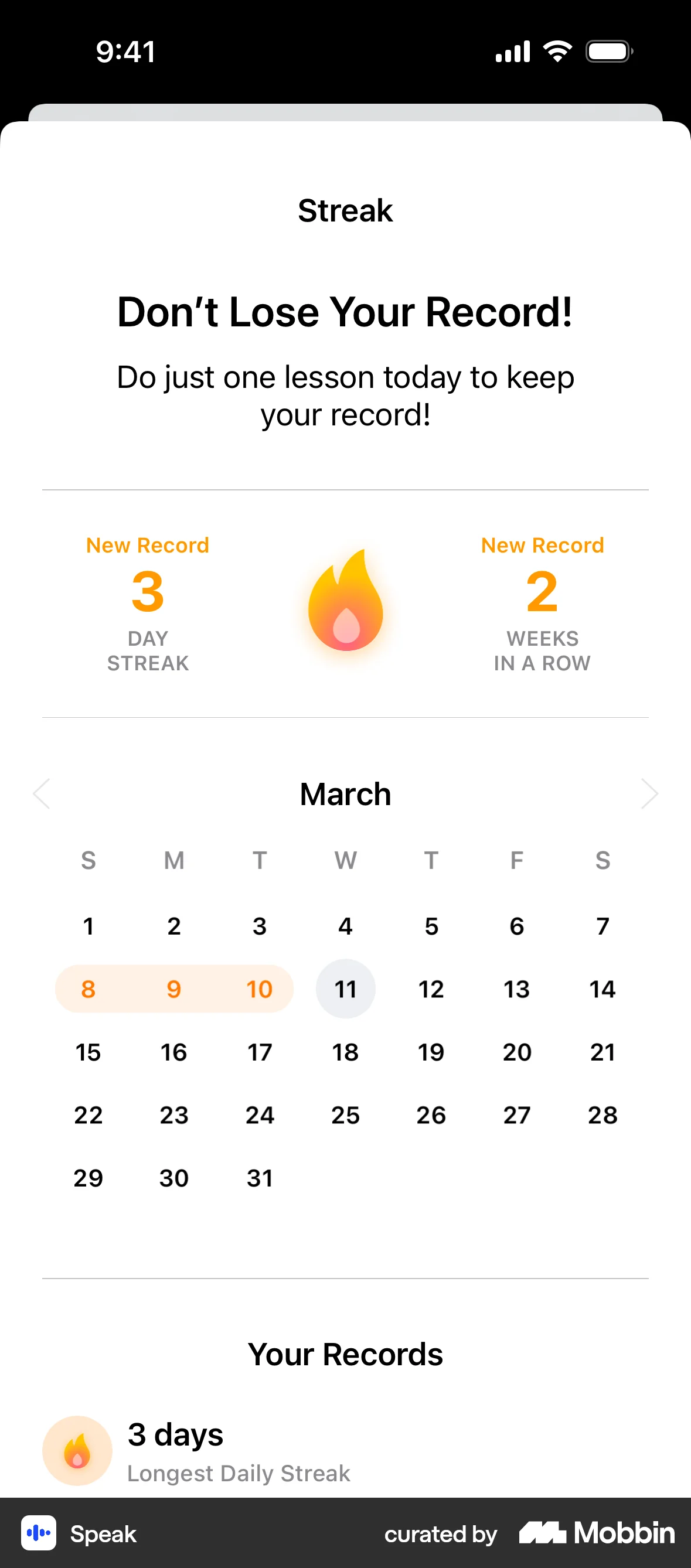
- Write the empty-streak state as the next start, not as a loss. The arm that worked told a student who had not connected that they could reach three consecutive weeks today; it never announced a break.
- Take the blame for breaks you caused — outages, time-zone edges, travel, a device left behind. Externally attributed breaks left 42.00% continuing against 28.87% for self-attributed ones, and most product-side breaks genuinely are yours.
- Keep a cumulative total beside the current run — sessions all time, days this year — so a miss resets one number and not the user's whole record. A zeroed screen removes the sense of accomplishment that carried the effect.
- Give the first repair away, automatically and without a purchase, ad or currency. 45% of participants said they would sit through an advertisement to keep a streak: that willingness is a reason not to charge, not a business model.
- Fire the streak message on the day you want the behaviour. Field effects were concentrated on message days, which makes the notification schedule, not the counter, the thing you are actually tuning.
- Let the user set the cadence during onboarding and change it later without losing the count. This is the hand-off to commitment and consistency: the stored target is theirs, and the streak is the record against it.
What to avoid
- Announcing the break. A highlighted broken streak left 45.21% continuing against 60.90% for the same behaviour with no log shown — a loss notification is the one streak feature with evidence that it is worse than having no counter.
- Blaming the user for a miss. The self-attributed break was the worst cell in the literature at 28.87% continuation, and guilt copy — “you let your streak die” — manufactures exactly that attribution.
- Selling the save. Charging money, currency or ad-watching for a repair monetises the pressure you created: 45% would watch an ad to hold a streak and 43% to repair one, which is the measure of how little resistance the price meets.
- Putting a streak on behaviour the user wants less of. The one field experiment on streak feedback in a self-control app reports that the streak became a competing goal and social-media use went up, so a counter on time spent, messages sent or sessions opened can invert the product's purpose.
- Shipping streaks to minors with no cap and no off switch. The Spanish data protection authority's 2024 guide classifies streaks and “perfect week” rewards as addictive patterns with data-protection consequences, and the European Parliament's December 2023 resolution asks for attention-seeking features to be off by design. The adolescent evidence is correlational, but it is about obligation and problematic use.
- Reading streak length as an effect. The field study behind this principle is correlational and its own authors warn it cannot separate the streak from the kind of user who holds one; “our long-streak users retain 4× better” is a sentence about selection.
- Treating a streak as a habit. Automaticity took a median of 66 days to plateau with a range of 18 to 254 days, and single missed days did not interrupt it — a counter at 30 is evidence that your notifications work, not that the behaviour has become automatic.
Real-world examples
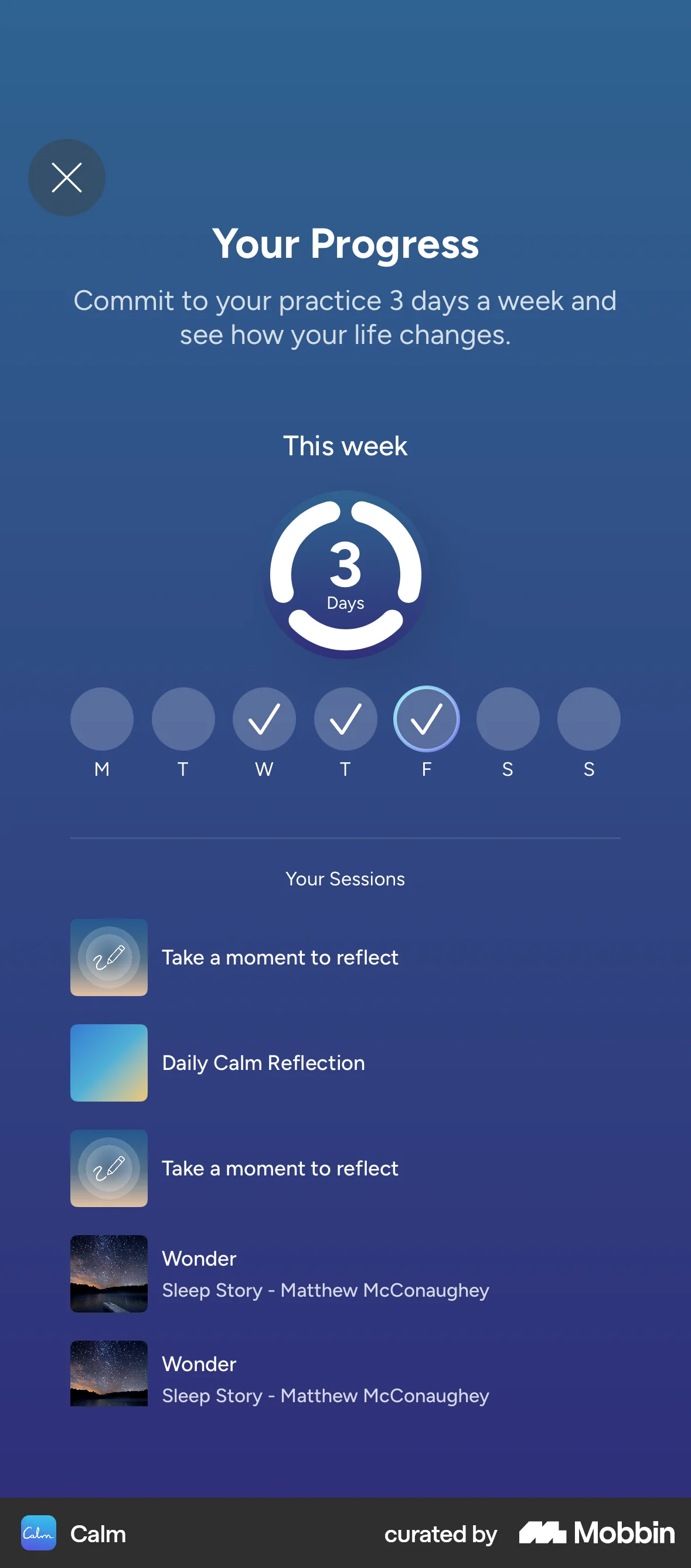
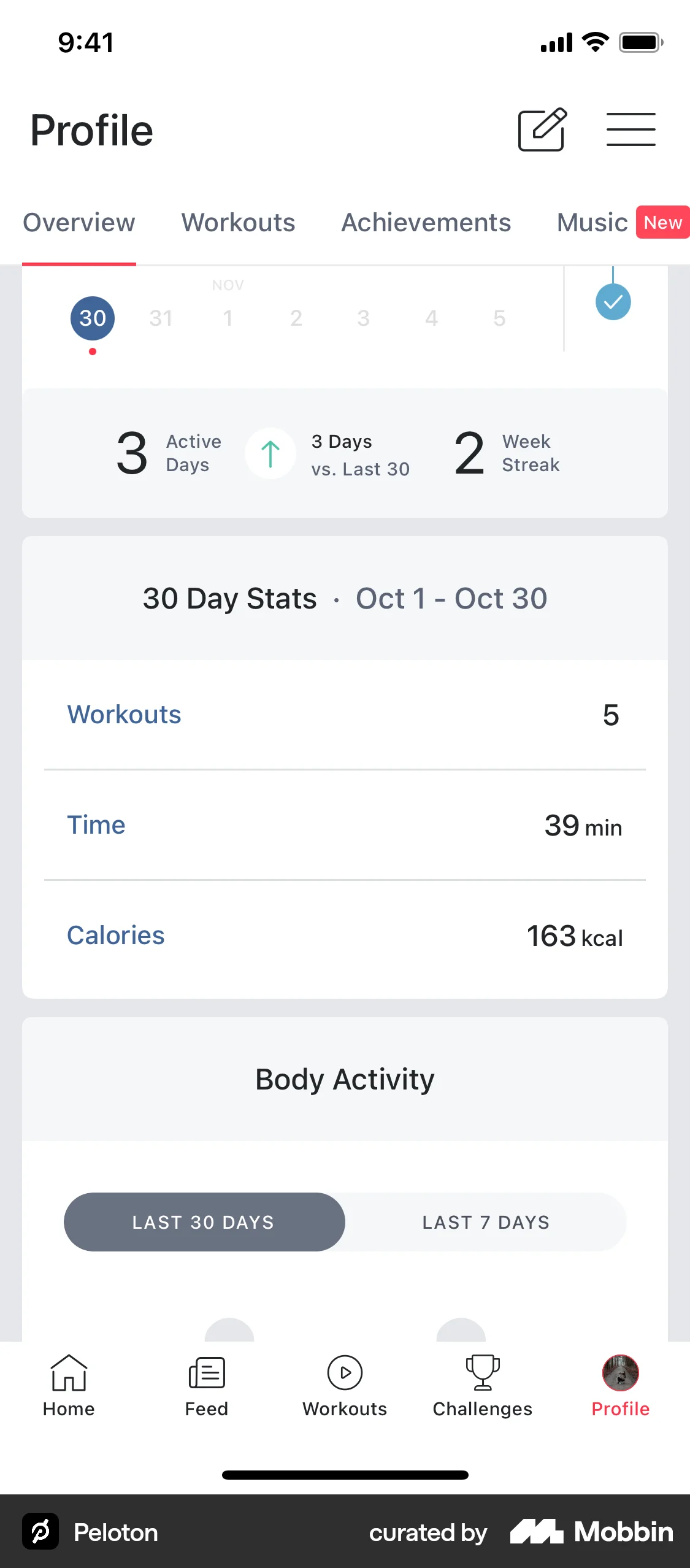
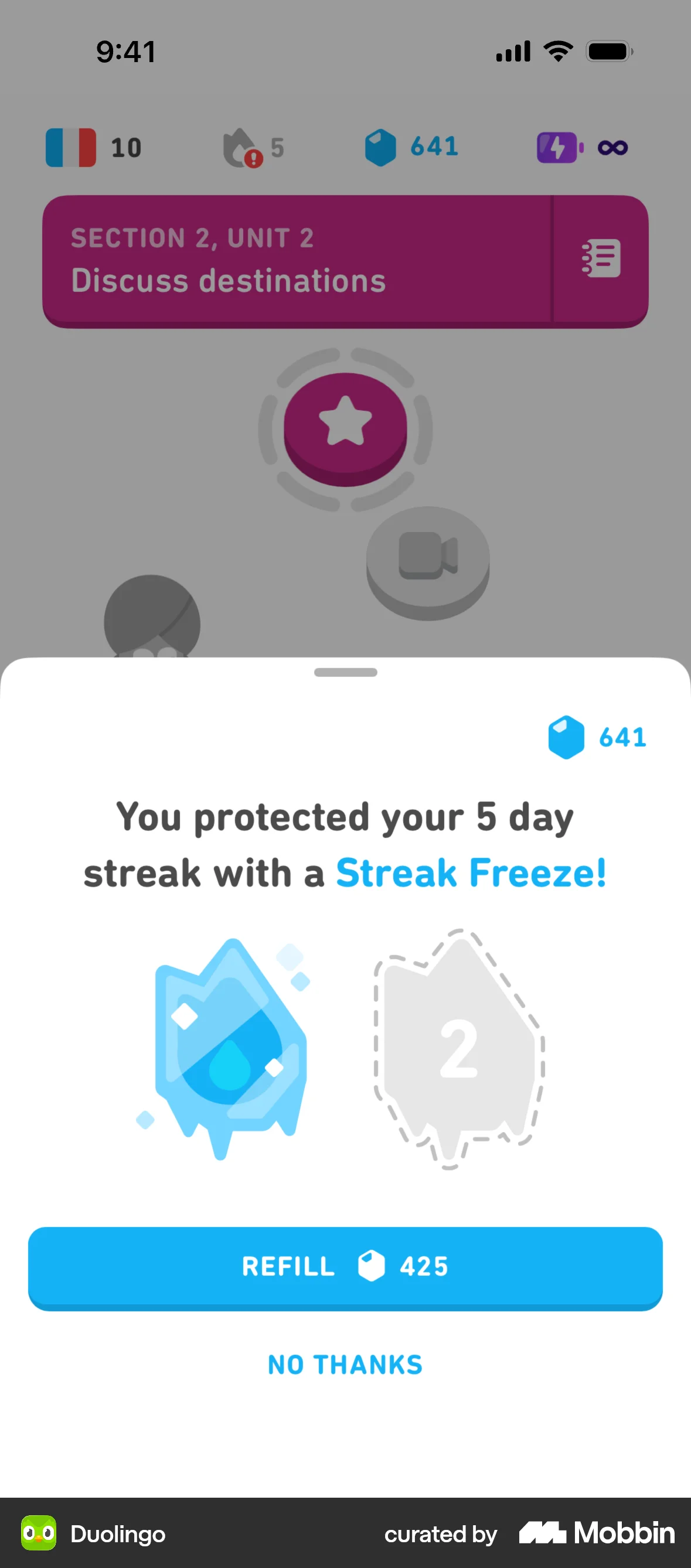
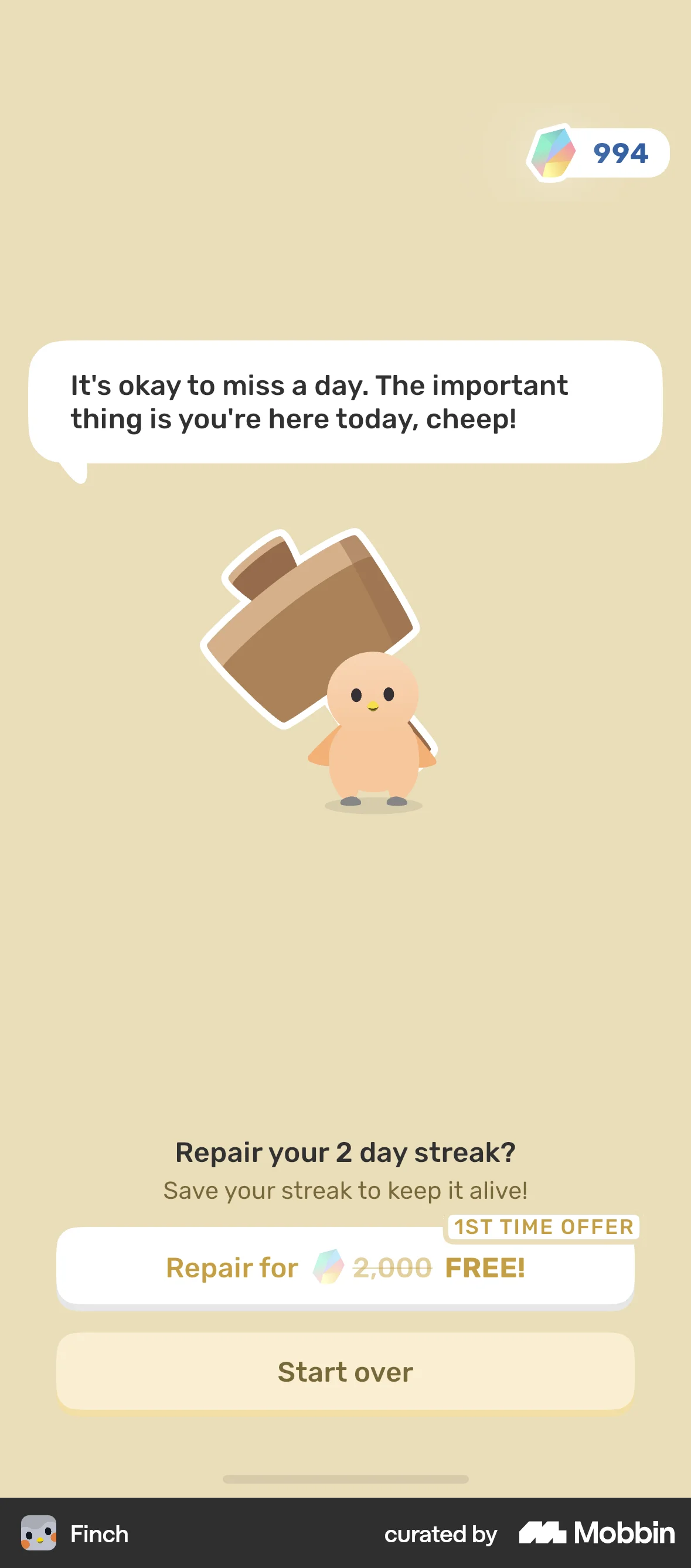
Measuring it
- Primary metric: return rate in the next period, counter shown against counter hidden, reported separately for users whose run is intact and users who just missed. The two directions are different effects and a single average conceals the negative one.
- Secondary: the share of users holding an intact run of n periods. In the field experiment 0.5% of controls reached four consecutive weeks against 1.5% in the streak arm, which is the intermediate outcome a streak is supposed to produce.
- Backfire metric: withdrawal after a break — consecutive periods with no use in the streak arm against a plain-reminder arm, plus notification opt-outs, permission revocations and uninstalls in the days after a break message. The first was the field experiment's own discouragement check.
- Backfire metric: depth per session. A streak is satisfied by the cheapest qualifying action, so track minutes, items completed or quality alongside the count; rising streaks with falling session depth means you are measuring compliance.
- Backfire metric, for anything with a self-control purpose: the target behaviour itself, not engagement. Streak feedback has been reported to raise the usage the product existed to reduce.
References
- Aulagnon, Cristia, Cueto & Malamud (2025). Streaks to Success? The Effects of Highlighting Streaks on Student Effort and Learning. NBER Working Paper.
- Silverman & Barasch (2023). On or Off Track: How (Broken) Streaks Affect Consumer Decisions. Journal of Consumer Research.
- Mehr, Silverman, Sharif, Barasch & Milkman (2025). The Motivating Power of Streaks: Increasing Persistence Is as Easy as 1, 2, 3. Organizational Behavior and Human Decision Processes.
- Lally, van Jaarsveld, Potts & Wardle (2010). How Are Habits Formed: Modelling Habit Formation in the Real World. European Journal of Social Psychology.
- Hillegass, Silverman, Gershon, Riedel, Grüning & Wolf (2025). In Service of the Streak: A Field Experiment on How Highlighting Patterns of Use Affect Social Media Usage. Working paper, abstract presented at the CHIBE research seminar.
- van Essen & Van Ouytsel (2023). Snapchat Streaks — How Are These Forms of Gamified Interactions Associated with Problematic Smartphone Use and Fear of Missing Out among Early Adolescents? Telematics and Informatics Reports.
- Hristova, Jovicic, Göbl, de Freitas & Slunecko (2022). “Why Did We Lose Our Snapchat Streak?” Social Media Gamification and Metacommunication. Computers in Human Behavior Reports.
- Agencia Española de Protección de Datos (2024). Addictive Patterns in the Processing of Personal Data: Implications for Data Protection. AEPD.
- European Parliament resolution of 12 December 2023 on addictive design of online services and consumer protection in the EU single market (2023/2043(INI)): attention-seeking features off by design.
For agents
An agent-friendly guide to this principle lives at /agents/streak-effect.md.
Our MCP server and skills for all principles are coming soon.
Similar principles
Disclaimer: The theories here are just that — theories. They may not apply universally and should be considered in context. Use your own judgment and consult additional sources when applying these principles.