Variable reward
Two mechanisms get called variable reward: a reinforcement schedule, where reinforcement follows an unpredictable number of responses, and resolution as reward, where the act of finding out is itself the payoff. Conflating them is how this principle gets misapplied.
The variable-ratio schedule is how slot machines, gacha pulls and loot boxes deliver prizes, and textbooks describe it as producing fast, steady responding with no pausing. Schlinger, Derenne and Baron's review of fifty years of ratio-schedule research traces that belief to Ferster and Skinner's cumulative records and calls it a procedural artifact: their variable-ratio distributions usually incorporated 1 as the lowest ratio, so a reinforcer could arrive on the very next response. When later work raised the lowest ratio to 4, 7 or 10, pausing reappeared and lengthened until it resembled fixed-ratio pausing in duration. The review's conclusion is that pausing under variable ratios can and does occur, depending on the distribution of the individual ratios. A sparse unpredictable payout does not inherit the behaviour of a dense one, so the schedule is not a citation that justifies thin rewards.
The human mechanism is better described as resolution as reward. Shen, Hsee and Talloen argue that the act of finding out is itself rewarding, which is why an uncertain incentive can out-pull a larger certain one. In Shen, Fishbach and Hsee's four studies with real rewards, participants invested more effort, time and money to qualify for an uncertain reward worth less in expectation — a coin flip between $1 and $2 against a guaranteed $2 — but only when attention was on the process of pursuit; under an outcome focus it did not hold. Four further experiments by Shen, Hsee and Talloen, in lab and field and at small and large magnitudes, added two boundary conditions: the effect arises only if the uncertainty is resolved immediately and not if resolution is delayed, and only after, not before, a person has engaged in repetitions. Their field study ran a 15-day event at a Hong Kong running club on a 400-metre track, where one arm earned five points a lap and the other three or five points a lap at random; the uncertain arm ran more laps despite the worse payout. Nothing in that account says uncertainty makes people want the thing more. It says the reveal is a small, separate reward laid on top of the thing. That is eight experiments from two overlapping author teams, called counterintuitive in the 2019 paper's own abstract, with no multi-lab and no registered-report replication of either — so the uncertain arm is the one that has to earn its place against a stated reward.
Uncertainty also has its own neural signal. Fiorillo, Tobler and Schultz recorded dopamine neurons under cues signalling different reward probabilities and found two distinct responses: a phasic activation that varied monotonically across the full range of probabilities, consistent with coding the discrepancy between predicted and actual reward, and a separate slower response that covaried with uncertainty — a gradual increase in activity until the potential time of the reward, maximal at p = 0.5, where uncertainty is greatest. The authors link the second to attention-based learning and risk-taking behaviour. That is a mechanism for anticipation, not for liking: what an uncertain reveal adds is the wait before it, which pays only if the wait is seconds long and ends on the same screen.
Rarity, not randomness alone, carries the response. Larche and colleagues had Overwatch players open loot boxes under physiological recording, in two experiments with 47 and 40 analysed participants. Rarer tiers were rated more valuable and more arousing, and the urge to open another box rose monotonically with tier: 25.39, 32.77 and 44.24 on a 0–100 scale for rare, epic and legendary in the first experiment, and 32.84, 40.00 and 55.63 in the second. In the second experiment pauses before the next box lengthened with tier — 4.91, 5.40 and 5.70 seconds — and skin conductance responses were largest for legendary (0.77), though rare (0.58) and epic (0.54) did not differ from each other. Arousal rose before the reveal rather than after it: skin conductance level slopes during the anticipatory period were steeper than at baseline, t(39) = −3.88, p ≤ .001, matching the uncertainty signal Fiorillo and colleagues recorded. A tiered reveal is therefore the strongest version of this pattern and the one closest to the harm literature: the pull to try again scales with how badly the top tier is wanted and how rarely it appears.
The one large-scale product dataset points at reward rate rather than unpredictability. Lindström and colleagues fitted reinforcement-learning models to over one million posts from over 4,000 individuals across several social media platforms, plus an online experiment (n = 176) on an Instagram-like platform. Users spaced their posts to maximise the average rate of accrued social rewards, subject to both the effort cost of posting and the opportunity cost of inaction, and the experiment showed social rewards causally influencing behaviour. The paper's own framing is that casting the online world as a Skinner Box for the modern human is a popular characterisation that evidence had not yet supported: what it supplies is evidence for reward-rate maximisation, not for variance in likes. The thing to build is the supply of real content.
The strongest body of work on this principle is about monetised randomness, and all of it is correlational. Zendle and Cairns surveyed 7,422 adult gamers and found loot box spending rose with problem gambling severity, χ²(3) = 284.255, p < 0.001, η² = 0.054, which they describe as small-to-medium; spending on other in-game microtransactions produced η² = 0.004. Garea, Drummond, Sauer, Hall and Williams meta-analysed 15 studies covering 16,229 participants for a pooled r = 0.26, 95% CI [0.15, 0.38], rising to r = 0.37 [0.25, 0.48] under trim and fill, with very high heterogeneity (I² = 98.25) and a Rosenthal fail-safe N of 8,360; the link to excessive gaming was r = 0.25 [0.15, 0.36] across 7 studies and 3,436 participants. Close and Lloyd pooled six open datasets of 7,771 loot box purchasers and obtained the same r = 0.26, p < 0.0001, noting the association is similar to or stronger than those between problem gambling and depression, drug use or current alcohol dependence. None of the three sets of authors can determine the causal direction; Garea and colleagues judge the explanation that people with existing symptoms buy disproportionately to be the more plausible one, since it does not require loot boxes to produce the pathology. The one prospective test is Palmer, Brooks and Clark's six-month study of 19- to 25-year-olds in British Columbia, 83 non-gamblers and 43 gamblers at baseline after cleaning: baseline loot box spending and Risky Loot Box Index scores predicted gambling initiation among the non-gamblers and predicted later gambling expenditure, while direct-purchase microtransaction spending did not predict initiation once loot box spending was controlled. The randomisation, not the spending, tracked the risk.
The revenue is concentrated in the people most at risk, and the pattern reaches children. In Close and Lloyd's pooled data, roughly 5% of loot box purchasers — those spending more than about £70 or $100 a month — generate around half of all loot box revenue and the top 2% around a third; almost a third of that top 5% fall in the problem-gambler band of the Problem Gambling Severity Index, and nothing in the dataset links higher loot box spend to higher personal earnings. Any feature that depends on repeat paid draws is operating inside that distribution. Zendle, Meyer, Cairns, Waters and Ballou found loot boxes in 58.0% of top-grossing Google Play games, 59.0% of top-grossing iPhone games and 36.0% of the most-played Steam games, with 93.1% and 94.9% of the loot-box mobile games rated suitable for ages 12 and over against 38.8% on desktop. The grade here follows the weaker half of the record: the harm association is sizeable and independently reproduced but cannot speak to cause, and the motivational effect a product team would actually build on rests on eight experiments from two overlapping author teams with no independent replication. Mixed, and the burden of proof sits with the uncertain version.
When it holds
- Resolution has to be immediate. Shen, Hsee and Talloen found no effect when resolution was delayed: a mystery reward you learn about tomorrow, next sprint or at the end of the month is not this effect.
- The person has to be repeating already. The effect arose only after, not before, repetitions had begun, which rules out acquisition, onboarding, sign-up and first-run — offering a chance of a discount instead of a discount will cost you conversions.
- Attention has to be on the process, not the prize. The motivating-uncertainty effect held under a process focus and not under an outcome focus, so a leaderboard of what others won or a prominently valued prize pool pushes users into the focus where the effect disappears.
- The schedule story is weaker than advertised. Schlinger, Derenne and Baron trace the belief that variable ratios produce steady responding with no pausing to procedures that used 1 as the lowest ratio, so a reinforcer could arrive on the very next response; raise the lowest ratio and pausing returns and grows with ratio size.
- Variance is not the same as rate. The one large-scale product dataset found reward-rate maximisation, sensitive to the effort cost of acting and the opportunity cost of not acting; the claim that feeds and pull to refresh work because they are variable-ratio schedules is an interpretation from trade writing, not a finding.
- It fails outright where the reward is instrumental. Randomising which file, answer or item a user needs to finish a task turns a tool into a slot machine, and the rarity evidence says the pull to retry scales with how badly the thing is wanted and how rarely it appears.
- The legal classification is unsettled and jurisdiction-dependent, which is itself a condition on use. The Dutch Council of State set aside the enforcement against FIFA Ultimate Team packs (ECLI:NL:RVS:2022:690, 9 March 2022), reasoning that most players obtain packs by playing, so the packs were part of a game of skill rather than a standalone game of chance, while Belgium's regulator effectively banned paid loot boxes by threatening prosecution — and Xiao's preregistered audit still found a randomised monetisation method in 82.0% of the 100 highest-grossing iPhone games there, and in 80.2% of those rated suitable for ages 12 and over.
How to apply
- Keep randomness off money and off anything the user needs. The defensible uses are unmonetised and non-instrumental: which of several equally good things you surface first, which illustration fills an empty state, which detail of a long result you lead with.
- Resolve the uncertainty inside the same interaction. A scratch-and-reveal that resolves on tap satisfies the immediacy condition; “you have been entered into a draw” does not.
- Attach it to repetition, never to sign-up. Use a certain, stated incentive to get the first action and hold any uncertainty back for a user who is already returning.
- Set a non-zero floor on the payout. In Shen, Hsee and Talloen's field design the uncertain condition paid three or five points a lap, never nothing: variable magnitude above a guaranteed minimum is supported, a chance of nothing is not.
- Cap the reveals — one per session, per milestone or per day — and provide no way to buy more attempts. That removes the repeat-until-you-win loop the harm literature tracks.
- Make the surprise about which reward arrives, not whether one does. “You have earned a reward, here is which one” keeps the reveal and drops the gamble.
- Build the content supply, not the slot machine. Make pull to refresh a plain manual refresh: real new items when there are any, an honest “nothing new” when there are not. Withholding available content so a later pull pays out is deceptive, and the one large-scale study of real posting behaviour says what holds people is the rate of real reward, not its variance.
- State the odds on screen before purchase wherever randomness decides what a payment buys. Apple guideline 3.1.1 requires apps offering loot boxes or other mechanisms that provide randomized virtual items for purchase to disclose the odds of receiving each type of item to customers prior to purchase.
What to avoid
- Paid randomness, the anti-pattern in one line. The moment a user spends money, or a currency they bought with money, on a randomised outcome, you are in the territory where the pooled correlation with problem gambling severity is r = 0.26 and roughly 5% of purchasers supply about half the revenue, a third of them scoring in the problem-gambler band. A revenue line that depends on that group is not a product decision you can defend as engagement design.
- Randomness on the critical path. If progress, access or a needed item is gated behind a draw, the only way through is repetition, and users who cannot afford to repeat are the ones excluded.
- Layered virtual currencies that put distance between a spend and its price. The Consumer Protection Cooperation Network's Key Principles on In-game Virtual Currencies, published 21 March 2025, state that exploiting cognitive biases in a manner that causes consumers either to overspend compared with what they otherwise would have, or to be left with unneeded amounts of in-game virtual currency, is likely to unfairly impact consumers' transactional decisions. Principle 2, whose legal basis is Articles 6(1)(d) and 7 of the Unfair Commercial Practices Directive and Article 6(1)(e) of the Consumer Rights Directive, names the practices to avoid: mixing different in-game currencies in one game, and requiring several exchanges before a purchase. Principle 3 adds bundles mismatched to item prices and denying users a choice of amount.
- Treating heavy spenders as your best customers. Principle 7 of the same document, grounded in Articles 5–8 and point 28 of Annex I of the UCPD, says that so-called whales may be considered vulnerable since they are likely to struggle with impulse control or gambling disorders, that games whose business model targets them are likely targeting a vulnerable group, and that their practices are therefore assessed against a stricter threshold. It also says to avoid basing the business model on practices that exploit vulnerable consumers' willingness to spend excessively.
- Assuming an adult audience. The same principles state that any game not exclusively intended for adults should expect a significant part of its player base to be under 18, that age gates and parental controls do not limit the trader's own responsibility, and that real-money spending should be disabled by default where the game is not adults-only. Loot boxes were present in 58–59% of top-grossing mobile games, and over 93% of those were rated suitable for ages 12 and up.
- Misstating odds or costs, and forcing a currency detour. On 17 January 2025 the FTC announced a settlement requiring the developer of Genshin Impact to pay a $20 million penalty over allegations that it deceived players about the odds of winning five-star loot box prizes and about how much opening boxes would cost, and over Children's Online Privacy Protection Rule violations. The order bars under-16 loot box purchases without parental consent, requires a real-money purchase path wherever loot boxes can be bought with virtual currency, bars misrepresenting odds, prices and features, and requires disclosure of odds and of exchange rates for multi-tiered virtual currency.
- Expecting enforcement to stop at disclosure. The CPC Network's common position on Star Stable Entertainment is dated 21 March 2025 and covers ads urging children to buy, time-limited purchase pressure and unclear virtual-currency pricing; actions covering nine further games followed, and the 2026 action concerning Call of Duty Mobile and Diablo Immortal lists addictive game design, preselected parental control settings and direct urging of children among the practices at issue.
- The ethical line, stated plainly: uncertainty may make a reward that a user already wants slightly more fun to collect. It must not be the reason they keep going. If removing the randomness would collapse the behaviour, the randomness was the product, and the people it holds hardest are the ones it is harming — and if you ship uncertainty, you own the result, not the citation.
Real-world examples

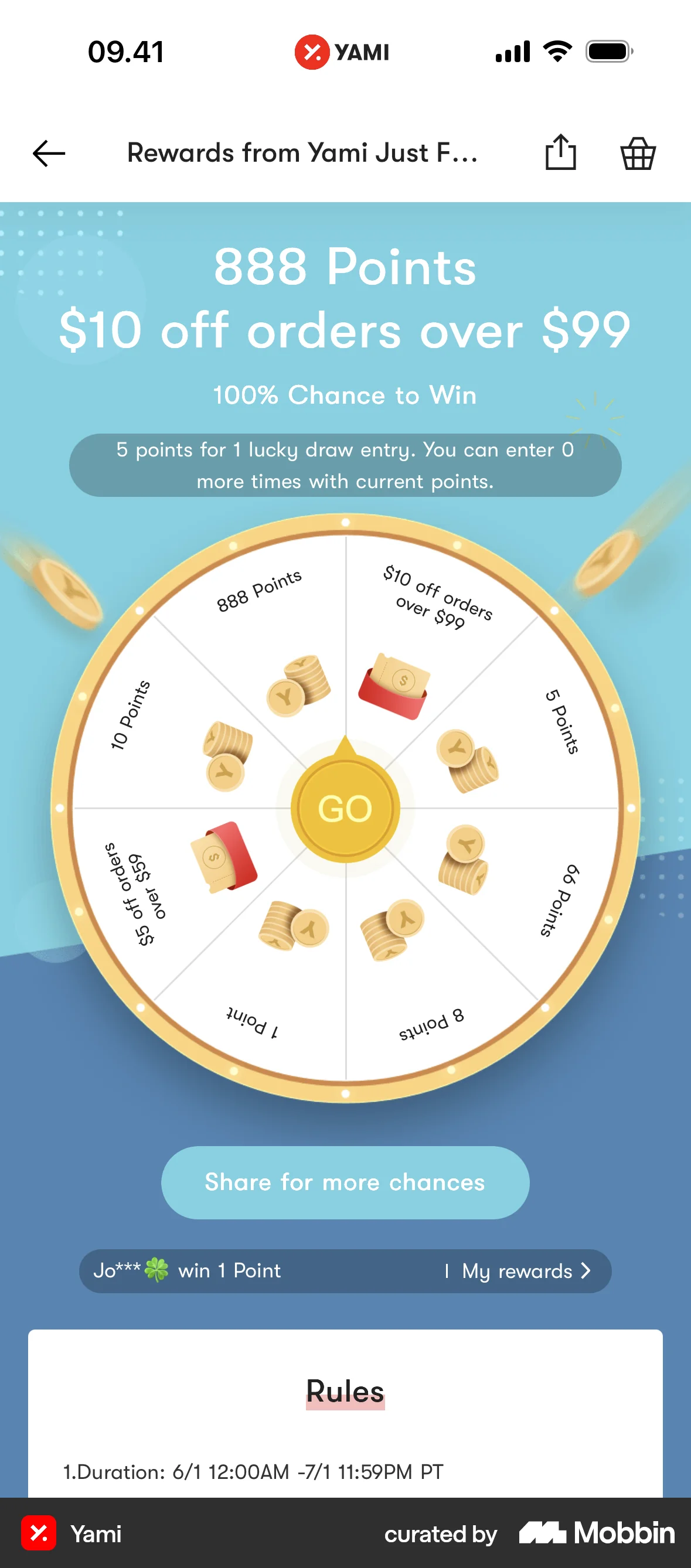

Measuring it
- Run the certain-reward arm. The comparison that matters is the uncertain incentive against a guaranteed one of equal or greater value, not against nothing — the 2019 paper calls its own effect counterintuitive, and the stated reward may simply win.
- Report the share of revenue from the top 1%, 2% and 5% of spenders rather than the mean. Close and Lloyd's benchmark is that roughly 5% of loot box purchasers supply about half of revenue; a curve that shape means you are monetising a vulnerable minority.
- Watch repeat attempts per session and time to the next attempt after a near miss or a low-tier result. Rising repetition after an unsatisfying outcome is the compulsion signal, and the one that should stop a launch.
- Count voluntary disengagement separately from churn: users who turn the feature off, mute it, or ask for their spending to be refunded or limited.
- Check whether the behaviour survives the reveal being removed. If retention holds with a stated reward, keep the stated reward.
References
- Schlinger, Derenne & Baron (2008). What 50 Years of Research Tell Us About Pausing Under Ratio Schedules of Reinforcement. The Behavior Analyst.
- Fiorillo, Tobler & Schultz (2003). Discrete Coding of Reward Probability and Uncertainty by Dopamine Neurons. Science.
- Shen, Fishbach & Hsee (2015). The Motivating-Uncertainty Effect: Uncertainty Increases Resource Investment in the Process of Reward Pursuit. Journal of Consumer Research.
- Shen, Hsee & Talloen (2019). The Fun and Function of Uncertainty: Uncertain Incentives Reinforce Repetition Decisions. Journal of Consumer Research.
- Lindström, Bellander, Schultner, Chang, Tobler & Amodio (2021). A Computational Reward Learning Account of Social Media Engagement. Nature Communications.
- Zendle & Cairns (2018). Video Game Loot Boxes Are Linked to Problem Gambling: Results of a Large-Scale Survey. PLOS ONE.
- Zendle, Meyer, Cairns, Waters & Ballou (2020). The Prevalence of Loot Boxes in Mobile and Desktop Games. Addiction.
- Garea, Drummond, Sauer, Hall & Williams (2021). Meta-Analysis of the Relationship Between Problem Gambling, Excessive Gaming and Loot Box Spending. International Gambling Studies.
- Close & Lloyd (2021). Lifting the Lid on Loot-Boxes: Chance-Based Purchases in Video Games and the Convergence of Gaming and Gambling. GambleAware.
- Larche, Chini, Lee, Dixon & Fernandes (2019). Rare Loot Box Rewards Trigger Larger Arousal and Reward Responses, and Greater Urge to Open More Loot Boxes. Journal of Gambling Studies.
- Palmer, Brooks & Clark (2025). A Longitudinal Replication Study Testing Migration from Video Game Loot Boxes to Gambling in British Columbia, Canada. BMC Psychology.
- Xiao (2023). Breaking Ban: Belgium's Ineffective Gambling Law Regulation of Video Game Loot Boxes. Collabra: Psychology.
- Consumer Protection Cooperation Network (2025). Key Principles on In-game Virtual Currencies, 21 March 2025.
- European Commission. Coordinated Actions: Social Media, Online Games and Search Engines.
- Federal Trade Commission (2025). Genshin Impact Game Developer Will Be Banned from Selling Lootboxes to Teens Under 16 Without Parental Consent, Pay a $20 Million Fine to Settle FTC Charges.
- Apple. App Store Review Guidelines, 3.1.1.
- Raad van State, ECLI:NL:RVS:2022:690 (9 March 2022), Electronic Arts v Kansspelautoriteit, as analysed by Dirkzwager.
For agents
An agent-friendly guide to this principle lives at /agents/variable-reward.md.
Our MCP server and skills for all principles are coming soon.
Similar principles
Disclaimer: The theories here are just that — theories. They may not apply universally and should be considered in context. Use your own judgment and consult additional sources when applying these principles.